
If you’re preparing for your first triathlon, chances are you’re feeling a mixture of nerves and excitement. With three sports and all sorts of logistics to think about, doing a triathlon can be nerve-wracking even for experienced athletes – let alone beginners! To help you keep those pre-race nerves under control, we’re here to share some top tips to help you get ready for the start line. From the things to do in the build up to the race to set yourself up for success, to what you need to know on race day.
Triathlon tips for beginners: What to do before your race
Wondering what to do in the final few weeks before you get on a triathlon start line? As your fitness builds, here are the things to start thinking about so you can get to race day feeling confident.
Practice piecing the three triathlon disciplines together
Hopefully you’ve been spending some time swimming, cycling and running in training. But something that even the most seasoned triathletes can neglect to do until race day is putting the three triathlon disciplines together. Running 5km, and running 5km after being on the bike can feel very different! In these last few weeks before your race, try to add a couple of short back to back sessions into your routine so that you can get used to how it feels.
If you can, try heading straight out for a short bike ride after a swim session (with minimal faffing in the changing room). And, to prepare yourself for the classic jelly-legged feeling of running off the bike, on another day you might want to tag a short run on to the end of a bike ride. Check out our blog on how to run after cycling for some in-depth tips and example sessions!
You don’t need to be smashing out full triathlons in training. But a couple of these ‘brick sessions’ will help you to know what to expect come race day.
No new kit on race day: plan what equipment you’ll use – and test it out
One of the golden rules of triathlon is ‘no new kit on race day’. So now is the perfect time to decide exactly what you’re going to wear, what equipment you’re going to use (for example goggles) and, for longer races, what nutrition you’ll take on board. Take it all out for a couple of test runs before race day so you can make sure you’re 100% happy. You certainly don’t want to discover that your kit chafes, your new goggles leak or your energy gels upset your stomach in the middle of your race!
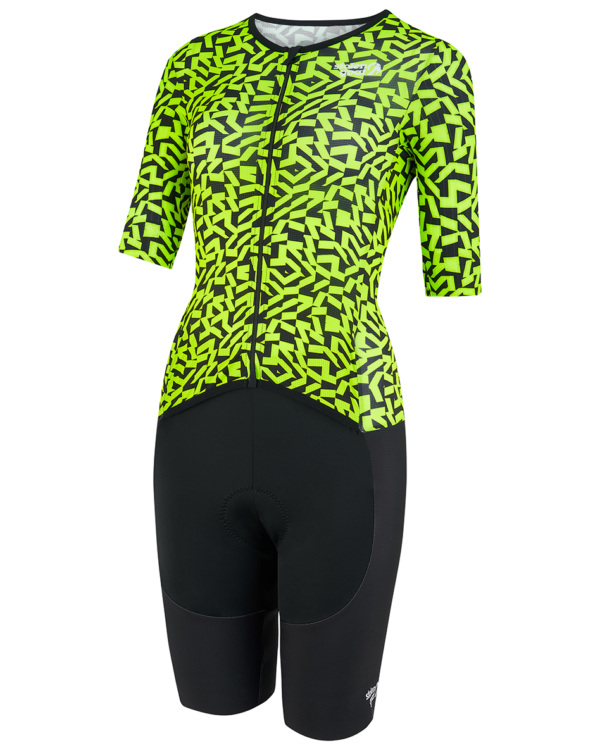
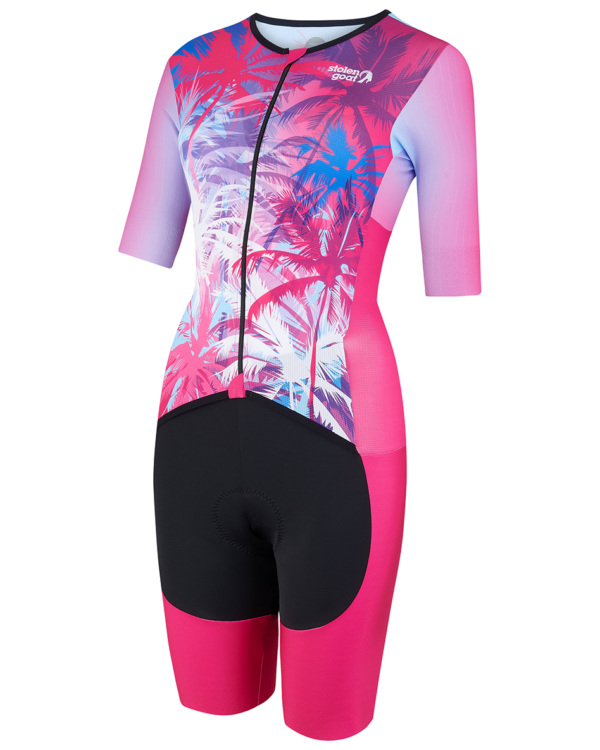
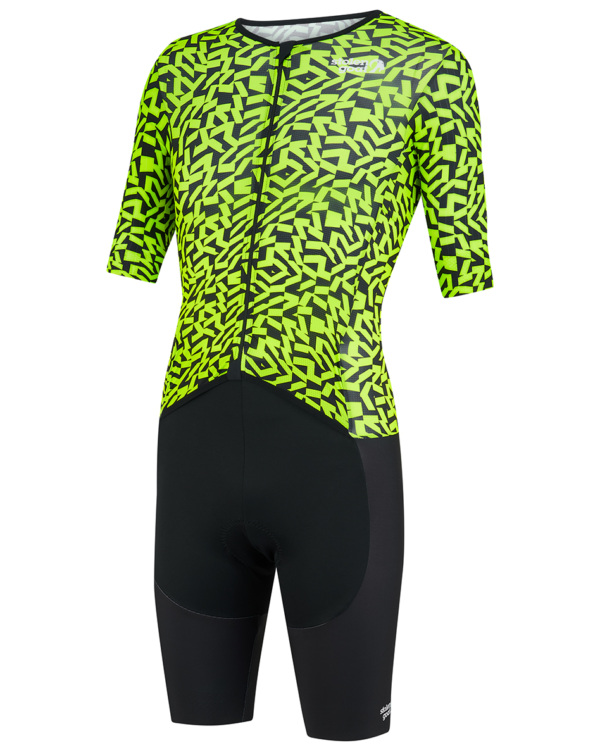
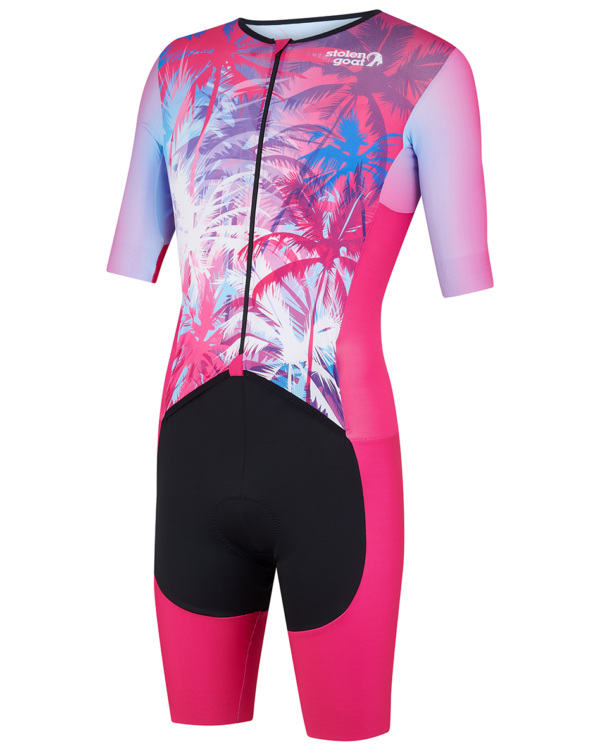
Not sure what to wear on triathlon race day? Our tri suits are the perfect option for ultimate comfort and performance. With no need to get changed between the disciplines, you’ll be flying through the swim-bike-run and crossing that finish line before you know it! Shop tri suits >>
Practice transitions
Transition is often referred to as the fourth discipline of triathlon and for good reason. Get your transitions slick and you’ll be flying through the field. But neglect to practice and you’ll lose valuable time. When the adrenaline is pumping and the pressure is on, it’s easy for ‘race brain’ to kick in and that’s when silly mistakes happen. Practicing your transitions at home might feel silly, but it’ll help ingrain the process into your muscle memory so you don’t have to think about it on race day.
Quick-fire tips for faster triathlon transitions
- Use Bodyglide (or any wetsuit lube) on your ankles, knees, elbows and wrists. It’ll make it easier to get your wetsuit off at pace.
- Lay your kit out in transition in the order that you’ll need it, with any buckles or fastenings (such as on your shoes and helmet) undone so it’s easy to put things on.
- Find a landmark (or count the number of bike racks) to make it easier to find your bike after the swim.
- Check the flow of transition and where the bike mount line is before the race so you know exactly where you need to go.
- Smooth is fast: be calm and methodical, it’ll be faster than trying to rush and making errors.
- Be tidy! You can get a penalty if your gear is strewn across transition so make sure you place things neatly.
- Practice running with your bike – it can be surprisingly tricky.
- Keep your wits about you. Transition is busy and it can be chaotic, so keep your eyes and ears open, make sure you’re not impeding other athletes and listen to any instructions from the marshals.
Give your bike a once over and brush up on a few basic mechanical skills
Don’t let a mechanical ruin your race! Give your bike a once over to make sure everything is working as it should be. Do this at least a week before your race (ideally two), so if you come across any problems you’ve got time to get them sorted out.Give it a clean and check your components such as brake pads and gear cables aren’t showing any signs of wear. Go through your gears and make sure they’re shifting smoothly. Check your tyres for any big cuts that could turn into a puncture. Check all your bolts (such as around your handlebars, seat post etc) are fastened securely. If in doubt, check your bike in for a service at your local bike shop.
It’s also worth just brushing up on a few basic mechanical skills such as changing an inner tube or getting your chain back on. Hopefully the bike leg of your triathlon will go smoothly, but if you get a puncture or your chain drops it’s far better that it’s a minor inconvenience you can fix yourself – rather than a race ender! Don’t be afraid to head into your local bike shop or ask your local cycling club for a few tips if you’re not confident. Or check out some of the ‘how to’ videos on the GCN YouTube channel.
Familiarise yourself with the rules and the race course
There are some important rules to know about in triathlon, such as ensuring you put your helmet on before you take your bike off the rack; not mounting your bike before the mount line; not drafting on the bike (riding closely behind another rider) and not dropping litter. Some races will also have additional rules specific to the race course – for example a mandatory ‘foot down’ point at a busy junction on the bike course. Read over any pre-race information and make sure you attend the pre-race briefing so you’re fully clued up. Don’t be shy about asking marshals on race morning if you’re not sure about anything – they’ll be happy to help.
Most triathlon courses are extremely well sign-posted, but it’s always a good idea to be familiar with what to expect. Check the direction of the swim course and which side of the buoys to swim on. Take a look over the bike route and make note of any technical turns or steep climbs so you can be prepared. Find out how many laps the run route is. Being familiar with the course will give you one less unknown to worry about the night before the race, and will help you to know where you need to pace yourself and where you can really let it rip on race day.
Make a race day kit checklist and pack your bag the night before
Three sports = a lot of kit to remember! It’s easy to forget things on race morning when the nerves are high and you’ve had to get up well before the crack of dawn to force down your pre-race breakfast. The weekend before your race, take the time to visualise each stage of the race and write down what you’re going to need. That way if there’s anything missing (we’ve all had that first race of the season, “where the bleat is my race number belt!?” panic) you’ve got time to hit the shops or order online.
The night before your race, consult your list and pack your bag so you’ve got one less thing to do in the morning. We’ve put together a handy pre-race triathlon checklist to help take some of the stress out of it for you!
Triathlon race day tips for first timers
It’s race day! Time to put all that hard work and preparation into practice. This is your victory lap, and with a few top tips in your tri suit pocket, you’ll be able to really enjoy your time out on the course.
Arrive at the race venue with plenty of time before the race start
Nothing defies the laws of time and space like race morning. One second it’s 3am and you’ve got plenty of time until the race start… the next, you’re sprinting through transition trying to simultaneously do your wetsuit up and put your goggles on to make it to the start line before the gun goes off. Time on a normal day and time on race day are two very different things – so give yourself longer than you think you’ll need to get yourself set up and ready. You don’t want to be stressed out, rushing around with your heart rate already maxed out before the race has even started!
Find out what time the race starts and what time you need to be ready at the swim start and work backwards from there. Leave yourself extra time in case of traffic or parking issues. It’s better to be a little too early than running late. Take warm layers with you so you can keep yourself cosy and dry while you set your transition zone up.
Take your time setting up your transition zone
Be calm and methodical as you get your bike and your gear set up in transition. Check your tyre pressure and ensure you’ve left your bike in a sensible gear to make it easy to get going when you jump on after the swim. Lay your kit out in the order you’ll need it and have a final walk-through of the transition zone so you understand the flow and where the bike mount/dismount line is. Remember: take note of any landmarks near your bike to make it easier to find your spot again after the swim.
Don’t be shy about asking questions or chatting to other athletes
Race morning can feel intimidating. It’ll probably feel like every other person there is a semi-pro with a ridiculously fancy bike and every other bit of triathlon gear under the sun. But in reality, you’ll find a real mix of seasoned athletes and fellow first timers. And regardless of how experienced a triathlete is – 99.9% of us are super friendly! It’s a sport known for its camaraderie. You’re not in this alone, so if you’re feeling nervous or you have any questions don’t be shy about asking. Almost everyone will be more than happy to help.
Pace yourself
Nerves, adrenaline, excitement… and a whole bunch of fellow weekend warriors getting hyped up right there with you on the start line. Those few seconds before the gun goes are electric… but it makes it easy to go off way too fast. Which is fun, until you blow up 2 minutes later! Keep it steady in the swim, making sure you’re thinking about your form and controlling your breathing to avoid going into the red. If you’re racing in open water, the first 100m or so can be a bit hectic. Some people love it – other people dread the notorious ‘washing machine’ that can be a triathlon swim. Just remember that it’s your race and you’re in control here. If you find yourself fighting for space in the water and it’s making you feel panicky, simply slow down a touch and move over to the side of the group furthest away from the swim buoys. You’ll only lose a few seconds and it gives you the chance to get back into your own rhythm.
Swim done, it’s time to hit the saddle! Resist the temptation to overcook the bike – it’ll make for a very slow and painful run and it’s more than likely that while you might have an impressive-sounding bike split, your overall race time will be slower than if you’d just paced yourself a touch.
Don’t rush your transitions (especially after you practiced them so diligently in the run up to race day!). “Less haste more speed” is very apt when it comes to triathlon transitions: stay calm, be methodical and you’ll get through a lot quicker.
Once you get to the run, beware of jelly legs! The sensation of switching from cycling to running can make it difficult to judge what pace you’re actually running. This, and the excitement of being on the final discipline and the finish line being in sight – can make it difficult to keep the pace under control. Sprinting out of transition will feel great for a minute or two, but then you’ll pay the price. Think calm, strong, controlled. Build into the pace and you’ll find yourself making your way through the field to finish strong.
Don’t forget to fuel and hydrate
Even over the shortest distances, triathlon is an endurance sport so it’s important to fuel and stay hydrated. When you’re wrapped up in the excitement of the race it’s all too easy to forget to take on any fluids or to get your energy gels down. Stay on top of it, and you’ll have the rocket fuel you need to race strong from start to finish.
Soak up the atmosphere and enjoy the moment!
Everything else aside, this is probably the most important tip: enjoy yourself! As amateur (or ‘age-group’) triathletes, we choose to do this sport as a bit of good old-fashioned, type A fun. Keep sight of that while you’re racing. Soak up the energy from the spectators. Share a few words of encouragement with your fellow racers and make the most of the incredible camaraderie in the triathlon community. Say thank you to the race marshals who’ve volunteered to get out of bed at silly o’ clock on a Sunday morning to stand out in the cold. You’ve worked hard to get here, so don’t forget to smile and really take in the experience. Your first triathlon is a big moment, so take it all in! There’s nothing quite like that race day feeling. Or that first bite of post-race pizza. (Bonus tip: always get post-race pizza).
Training days and race day: Stolen Goat has triathletes covered
Whether it’s a training day or race day, there’s Stolen Goat kit for it! Premium quality, next-level comfort, stand-out style. Same Goat: different sports. Check out our latest cycling kit range for all your training rides. Our ultra-lightweight run gear is perfect for pounding the pavements. And on race day, our tri suits (developed with input from a multiple-world championship finisher) will have you flying towards the finish line in comfort and style. Racing with your Herd? We also do custom tri gear for clubs, teams and small groups!