



Got a triathlon event lined up but not sure what to wear on race day? In our triathlon gear guide we’ll take you through everything you need to get on a triathlon start line. From the essentials (including the key bits of kit you need to adhere to the rules) to the nice-to-haves which are optional, but might make your life that little bit easier while you’re racing.
Essential triathlon gear
Three sports, one start line. If you’re new to triathlon (or coming back to it after some time away) figuring out what you need for race day can feel a bit overwhelming – especially with more and more high-tech gear out there. So let’s start with the basics and cover the essential things you’ll want in your kit bag for race day.
Tri suit
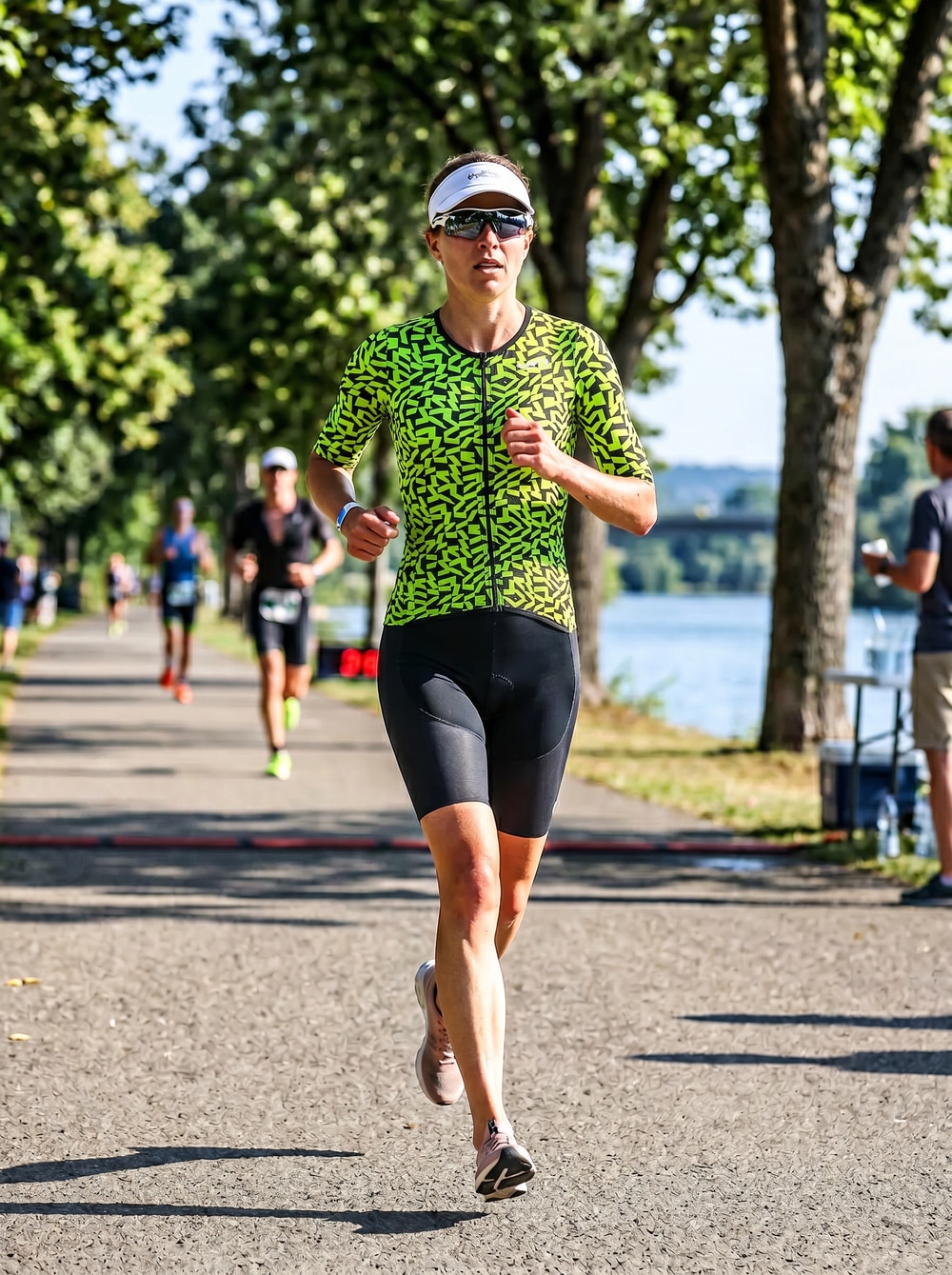
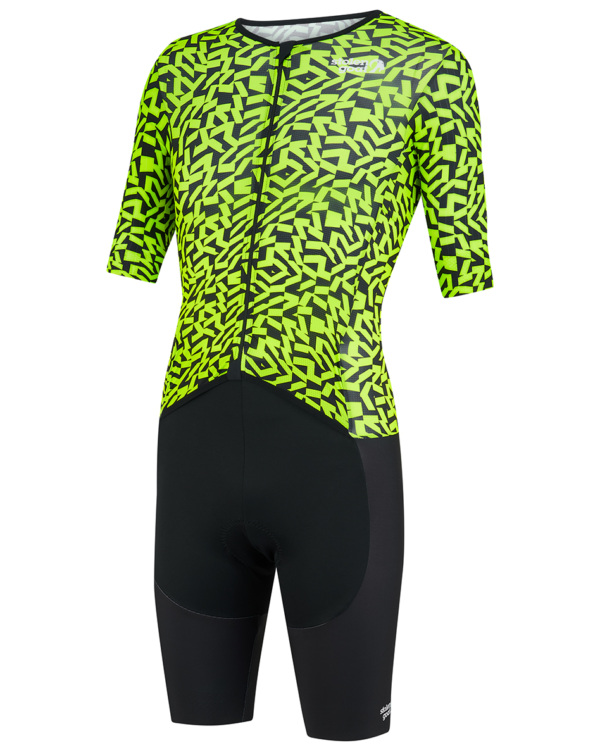
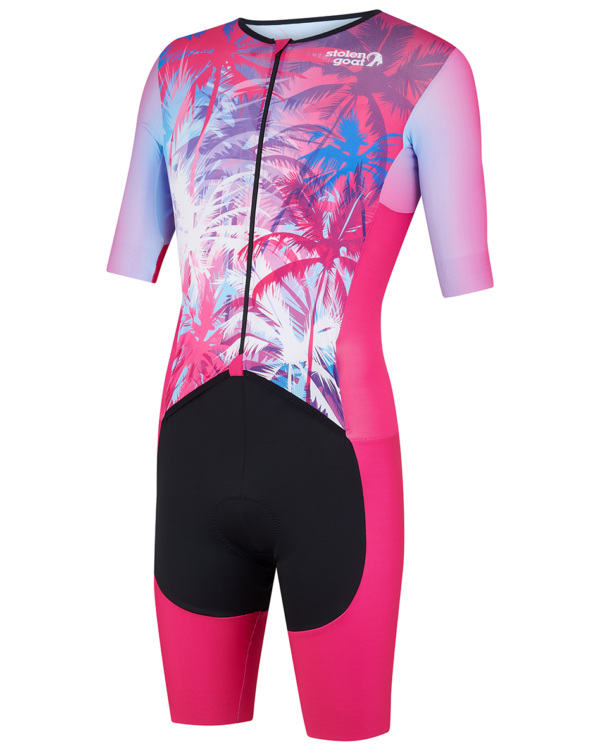
You don’t have to wear a tri suit to participate in a triathlon. But it’ll make your life so much easier. You can of course, wear separate swimming, cycling and running kit. But this will involve losing a significant amount of time in transition trying to get changed. It’s also worth knowing that no nudity is allowed in transition, so unless your race has a dedicated changing tent you’ll most likely have to put your cycling gear on over your swim suit. Chafe-central! Beyond the logistics, a tri suit is also designed to offer optimal comfort and performance across all three disciplines and has built-in pockets to carry your nutrition. So it’s faster, more efficient, and more comfortable. Definitely worth wearing!
What to look for in a tri suit
There are a huge range of tri suits out there with wildly varying price tags. So what are the key features to look out for to decide if a tri suit is right for you?
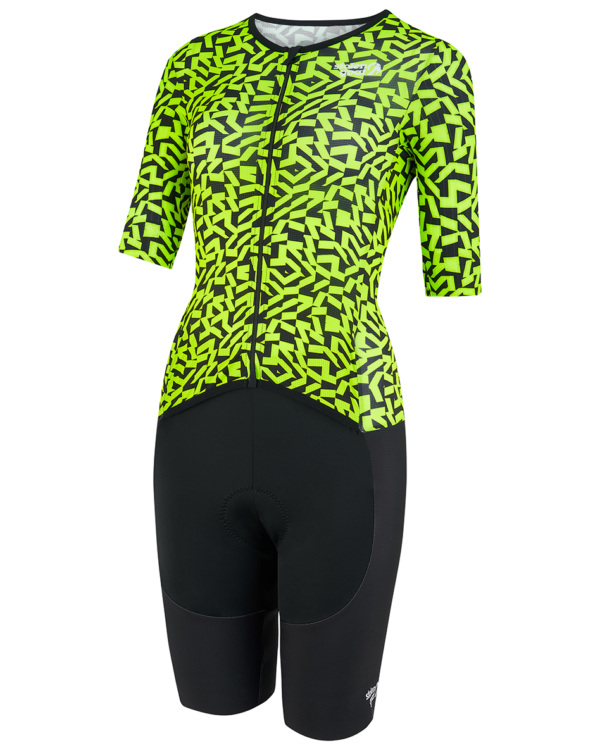
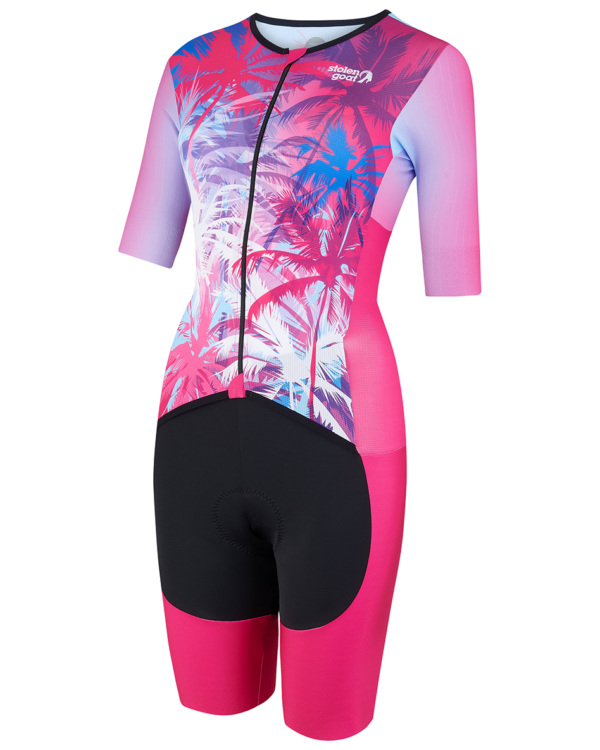
- High quality, breathable fabrics: some of the cheaper options out there might look fine, but they’ll be made from fabric which is too thick and doesn’t stretch enough. The result? Struggling to get your arms overhead to swim and overheating on the run. Look for a tri suit which has two-way breathability and four-way stretch so it’ll keep you cool and offer a close-but-comfortable fit.
- Triathlon-specific chamois pad: a good tri suit will have a chamois pad which is designed to dry quickly/not retain water after the swim and offer enough comfort for the bike without being noticeable on the run. It’s hard to get right, which is why we’ve added a top of the line chamois pad to all our tri suits! Look out for sex-specific chamois pads too – male and female anatomy requires different distribution of padding and support, so a one size fits all approach is a one way ticket to chafing and saddle sores.
- Pockets: check your tri suit of choice has pockets on the rear to carry your nutrition and any other essentials you want with you during the race. We’ve added side access pockets to our tri suits as these are easier to reach while you’re cycling, and create less drag in the water during a non-wetsuit swim.
- Stand out style: make sure your cheer squad can spot you on the race course! Once the key features are covered, choosing the best tri suit comes down to finding a design you love.
Do I need a wetsuit for a triathlon?
Whether or not you’ll need a wetsuit for a triathlon depends on if the swim takes place in a swimming pool, or in open water. For open water triathlons, it’s highly likely you’ll need to wear a wetsuit. Most races require a wetsuit to be worn (unless the water is particularly warm). Wearing a wetsuit will help to keep you warmer in cool water, and it offers additional buoyancy which is ideal from both a safety perspective – and because it helps you to maintain a better body position and swim more efficiently.
What type of wetsuit to wear for a triathlon?
You’ll want to make sure you have a swimming wetsuit for a triathlon, not a surf wetsuit. Surf wetsuits are designed for warmth, not range of movement or efficiency. It’ll be too thick, you won’t be able to move your arms freely and it’ll create unnecessary drag in the water. A triathlon/swimming wetsuit will give you better range of movement, has a ‘slippy’ coating to help you glide through the water and they’re designed to be much easier to remove at pace. There are some great entry-level options out there, so you don’t have to spend a fortune. But if you want to feel comfortable in the swim, it’s worth buying or hiring a triathlon/swimming wetsuit.
Triathlon wetsuit quick tips for beginners
- The zip goes at the back!
- Your wetsuit might feel too tight on dry land standing up, but in the water in a swimming position it should feel just right.
- Use wetsuit lube (such a bodyglide) on the back of your neck to prevent chafe when turning to breathe/sight. In a race, put this on your wrists, elbows, knees and ankles too – it’ll make it easier to remove your wetsuit at pace.
What type of bike do I need for a triathlon?
Clearly, you’re going to need a bike to do a triathlon! As long as your bike is in good working order, any bike is fine. You’ll see all sorts at local events – ranging from mountain bikes and hybrids right up to ultra-aero race steeds. So for your first race, whatever bike you have access to will be absolutely fine while you decide if you want to get more into the sport.
A road bike is better than a mountain bike/gravel bike as it’ll be faster and more efficient – helping you to save energy for the run. If you want to start racing regularly, you could also consider upgrading to a triathlon bike. These are super aero, and designed to be as fast as possible with aero bars out front and a unique frame geometry which helps you to adopt an ultra-low riding position. However, a triathlon bike is a relatively niche bike (you probably won’t bring it to the Sunday club ride) so it’s only worth it if you plan to race several triathlons and want to step up to longer distances. The significant difference in riding position and frame geometry also takes some getting used to as it affects how the bike handles (particularly while cornering and descending) so if you do decide to bite the bullet and get a triathlon bike, make sure you have plenty of time to practice riding it before your race.
Helmet
Every single person participating in a triathlon must wear a helmet – it’s the rules. No helmet, no race. Again, you can go all in on an aero ‘time trial’ helmet, but your every day road lid will also be perfectly fine.
Make sure your helmet is in good condition and fits correctly. Race officials will check it over when you arrive on race morning so it needs to be in good shape, otherwise you might not be allowed to start.
Triathlon goggles
You don’t have to wear goggles in a triathlon, but pretty much everyone does – it’s easier to see where you’re going! Go for mirrored/tinted goggles for open water triathlons. Most races start early in the morning which means the sun is low, and a mirrored/tinted lens will give you better visibility. Goggles with a wider frame and larger field of vision are also a good idea versus small, low-profile pool-specific goggles. You’ll want to make it as easy as possible to ‘sight’ and make sure you’re swimming in the right direction during your race.
Race belt
A race belt is an elasticated belt with a buckle fastening and attachments for your race bib number. You’re not allowed to wear your race number in the swim, but you have to wear it for the bike and the run. Using a race belt will save you significant time versus having to stand and attach your bib number in transition. Most race belts also have loops and/or a zip pouch which you can use to carry your sports nutrition.
Cycling shoes
If you prefer, you can use flat pedals and cycling in your running shoes for a triathlon – plenty of beginners prefer to do this. If you’re a more experienced cyclist, you might prefer to take your cycling shoes as you’ll have better efficiency and power transfer during the bike leg.
Running shoes
On to the final discipline of a triathlon, and once the swim and the bike is done – you’re going to want some running shoes waiting for you in transition! We’ll talk more about whether it’s worth getting specific ‘race shoes’ later, but for the essential gear – whatever shoes you’ve been training in will be just fine.
Triathlon gear: added extras to optimise your performance
Once you’ve got the basics covered, you’re all set to go racing. But there are a few optional extras you could consider if you want to maximise performance and efficiency.
Calf sleeves
Many triathletes choose to wear calf sleeves. They offer some compression for the lower leg, which may help to reduce cramping and fatigue. But the main reason to wear them is the improved aerodynamics on the bike. Calf sleeves are created with aerodynamic fabric which helps to reduce drag compared to bare skin. Over longer distances (and/or at higher speeds) this can save time and energy on the bike.
If you plan to race in calf sleeves, make sure you’ve tested them out in training to ensure you’re comfortable. If the race is a wetsuit swim, you can wear them underneath your wetsuit. However, if it’s a non-wetsuit swim you won’t be allowed to put them on until you reach T1 – doing so with wet skin could cost you more time than you’ll save so it may not be worth it.
Sports sunglasses
Will they make you ride or run faster? No. Are they essential? No. But sports sunglasses look cool, and they’ll help to protect your eyes from UV rays and any debris on the road. Plus that way no one can see how much you’re suffering in the closing kilometres. Win-win!
Swim skin
If the water is above a certain temperature, the race may become a mandatory non-wetsuit swim. Many triathletes panic about this as they’ve become reliant on the extra buoyancy of a wetsuit! You can wear a swim skin over your tri suit – it won’t add buoyancy, but it will help you to be as efficient as possible in the water. A swim skin looks a bit like a sleeveless tri suit or the swimsuits you’ll see pro swimmers race in. It has a compressive fit which makes you more streamlined, and a hydrophobic coating. Wearing it over your tri suit will help to reduce drag in the water. Just remember to take it off in T1.
Triathlon-specific cycling shoes
Getting a bit more serious about triathlon? You could consider wearing triathlon-specific cycling shoes. These can help to speed up your transitions. They have a wider opening and a simple single strap fastening, which allows for faster foot entry – so you can leave them clipped to your pedals and get your feet in the shoes after you’ve jumped on the bike. They’re useful for hot weather racing as they offer more cooling compared to a pure road shoe.
Carbon-plated running shoes
Super shoes/carbon running shoes are definitely a nice to have rather than an essential. They can be quite aggressive and unstable, so they’re not recommended for new runners. But if you’re a little more experienced, you may benefit for the improved running economy and increased energy return which can help you to run faster on tired legs. Consider the terrain of your race – on mixed terrain courses a super shoe might not be worth it because they tend to lack grip and stability.
Other random (but useful) things to take to a triathlon
Beyond all your race gear, there are a few extra bits and bobs that can actually be really handy to take with you for before/after the race. Here’s what we tend to pack in our transition bags after several years of race experience:
- Toilet roll. The pre-race loos can be… an ordeal. And toilet roll can become like liquid gold. Take your own, just in case supplies run low.
- Hand sanitiser. Probably self-explanatory in the context of point 1!
- Bin bag. Race morning can involve time spent loitering around in a cold, wet field on the side of a lake while you wait to start. A bin bag gives you something to either sit on while you wait, or to stand on while you put your wetsuit on without getting cold, muddy feet.
- Dry robe / change robe. Useful for keeping warm before and after the race – if you have supporters with you, hand this off to them just before you head to the start and ask them to bring it to the finish line.
- Sandwich bag. For longer distance racing, pop all your run nutrition in a sandwich bag in transition. Instead of wasting time standing there filling your pockets, you can just grab this and do your ‘admin’ during the first kilometre to save time.
- Sliders / flip flops. Handy for before the race to protect your feet, and once you finish you’ll appreciate having something to wear other than your sweaty run shoes.
Gear up for your next triathlon
The Stolen Goat range of tri suits have been developed with input from experienced triathletes (including a multi-time world championship qualifier). Designed to offer the perfect balance of comfort, performance and stand-out style. Check out the latest range here >>