

Cycling events are a great way to meet new people, discover new cycling routes and to keep yourself motivated to ride consistently because you’ve got a specific goal to work towards. But when you first start looking into all the different types of cycling events and the various cycling race formats, you might start feeling like you’re trying to learn a second language. What’s the difference between a road race and a crit race? Is a sportive competitive or can you just enjoy the ride? And what the bleat is an audax!? In our in-depth guide to cycling events for beginners, we’ll talk you through the different types of cycling events on offer, the best beginner cycling events and share some insights on how to get ready for your first cycling event. Plus, a bit of inspiration if you’re struggling to pick a race!
Jump to…
- What are the different types of cycling events?
- Best cycling events for beginners
- How to prepare for your first cycling event
- Event-ready cycling kit
What are the different types of cycling events?
When you start looking into cycling events, you’ll find there’s a huge spread. From small charity rides in your local town, all the way up to national-level races. So one of the easiest ways to start breaking down the different types of cycling events is to begin with the various types of terrain. Most events can be categorised into either road, gravel or mountain biking. Within these different cycling disciplines, you’ll start to find different race formats (for example cross country vs enduro in mountain bike racing). Cycling events can also be competitive or non-competitive. For example, a road race is all about going ‘bar to bar’ with the other riders and competing for spots on the podium. Whereas a sportive is about completing the distance. Mass start cycling events will see you setting off at the same time as all the other riders. Whereas timed events where it’s you versus the clock see riders set off individually. And then, perhaps most applicable for ultra-cycling events and audaxing, events can either be supported (with aid stations, check points and roaming mechanics) or self-supported.
As you can probably tell, the world of cycling events is quite the rabbit hole! This guide won’t be exhaustive (by the time we’d finished it they’d have probably invented another new race format and we’d have to start over). Instead, we’ll talk you through some of the most popular cycling event formats before diving into the most beginner-friendly cycling events. Let’s roll!
What is a cycling sportive?
A cycling sportive is a non-competitive cycling event. These are mass participation events (meaning you don’t need to be an experienced rider to enter) where you’ll follow a pre-planned, signposted route alongside fellow cyclists. You’ll get an official finish time, and perhaps even a finisher medal – but these events don’t have an official ‘winner’ or a podium ceremony.
Most cycling sportives have different distances on offer to suit a wide range of cycling abilities. And many set up aid stations along the route with food, water and mechanical support. A sportive is a great way to challenge yourself to take on a longer distance than you might be used to riding solo, with the confidence that you’ve got support if you need it and the camaraderie that comes with taking on the challenge alongside other riders. The precise format of cycling sportives can vary. Some will feature a mass start, where all riders line up and set off at the same time. Others use a wave start where smaller groups will set off in set time intervals to ensure the route isn’t too busy.
Who are cycling sportives suitable for?
Anyone! You’ll find a real mix of riders at a cycling sportive, ranging from complete beginners right up to experienced riders. The supportive, non-competitive format makes sportives really beginner-friendly. There’s no pressure, and you can take it as easy (or as hard) as you want to.
Why are cycling sportives so popular?
Sportives are one of the most popular cycling events going. That’s because they’re friendly, accessible and suitable for all riders. They’re a great way to ride somewhere different, without having to spend hours planning your own route, and many cyclists enjoy a sportive as a way to get their long ride done with the added fun and support that comes with riding alongside others, rather than having to grind out the miles solo.
Gran Fondo vs cycling sportive – what’s the difference?
Gran Fondo translated from Italian means ‘big ride’. A Gran Fondo and a sportive are very similar in that they’re both mass participation cycling events. However a true Italian Gran Fondo can bring in more of a racing element, with a stronger field at the pointy end of the event, closed roads and more of a competitive feel.
Find your next cycling sportive
We’re thrilled to be the official kit partner for UK Cycling Events, who offer sportives in some of the most stunning cycling locations in the country. Each event has a range of distances on offer, making them accessible for all levels of cyclist. And we’ve created a beautiful (if we do say so ourselves!) range of UKCE jerseys to commemorate each event. Find out more in our comprehensive guide to the 2026 UKCE cycling sportives.
Time trial cycling explained
A cycling time trial is a you versus the clock cycling event. A full gas, solo effort where it’s purely about covering a specific distance on a specific course in as fast a time as possible. Riders are set off in set intervals (usually 1 minute apart) and once every rider has completed the course, the overall winner is the cyclist who has set the fastest time. Without the tactics and team dynamics of other cycling races, time trial cycling is all about aerodynamics, pacing and having the mental grit to push your limits without a bunch to chase.
What are the most common cycling time trial distances?
The most common cycling time trial distances are 10 miles, 25 miles and 50 miles. Many cycling clubs will run a ‘club TT’ on a weeknight through the summer months which is usually 10 miles. A 10 mile TT is popular because it’s accessible for those new to time trialling, and experienced riders can really push the power without having too far to roll home if they overcook it.
However, you can also find longer distance time trials including 100 mile TTs, and races that flip the script and become about who can cover the most miles in a set time frame. For example a 12 hour TT will see riders completing a set loop as many times as they can within the 12 hour time limit. Once the clock stops, the winner is the rider who covered the greatest distance.
Cycling time trial categories
Unless specifically stated by the organiser, you can ride either a road bike or a time trial bike for a cycling TT. Most events have separate ‘machine’ categories, for road bikes, TT bikes and tandem riders (because TT bikes are much more aero, so it wouldn’t be a fair race to pit one against the other). Awards are further subdivided by gender with men’s and women’s prizes. There are also age categories, which typically fit within the following framework:
- Juniors (U18s)
- Espoirs (18-23)
- Senior (23-39)
- Vets (40+, sometimes further divided into 5-year age categories)
Cycling time trial rules: what you need to know before you ride
Cycling time trials are a fun, accessible way to test yourself over a set distance and meet new riders. But even the casual club TTs have a few rules you need to know about:
- No lights, no ride. You must have a functioning white front light and red rear light fitted to your bike and switched on during a TT. It’s about safety, so most starters will be strict on this, so make sure your lights are charged up and ready to go.
- Helmets are mandatory. Road helmet or aero TT lid, it’s up to you. But either way, your noggin needs to be protected.
- No drafting. A time trial is known as the ‘race of truth’, so put in an honest effort. It’s about how fast you, individually, can cover the distance. Not how fast you can go while benefitting from another rider’s draft. Mind the gap, and if you catch your minute (wo)man (the person who started a minute ahead of you) hang back and overtake when it’s safe to do so.
- No head down riding. Again, this is about safety – you must have your eyes on the road ahead at all times. Yep, even when you’re deep in the pain cave!
Those are the core rules, but check with your local organiser for any other course- or event-specific rules you need to know about. Remember, almost all cycling time trials for amateurs are going to take place on open roads shared with motor traffic so even when you’re pushing your limits you’ve got to keep safety in mind.
Do you have to get a TT bike and all the aero gear to do a cycling time trial?
Definitely not! You can get involved with time trialling with your existing gear. There’s a separate road bike category, and having an aggressive aero helmet and a skinsuit certainly isn’t a prerequisite for taking part.
Are cycling time trials good for triathletes?
Mixing in some cycling time trials is great training for triathletes. Most triathlon bike courses will favour those who can hold an aero riding position for extended periods of time, so time trialling in training can be a great way to get better at holding your position and pushing sustained power. They’re also a good way to get an FTP test done with a bit of extra motivation from lining up with other riders – there’s a certain amount of solidarity in knowing you’re all out there suffering together.
Cycling road races
Next, let’s dive into the world of cycling road racing. First we’ll start by taking a look at the different types of cycling road race events you can get involved with. Then we’ll go into the different racing categories.
Mass start cycling road races
Unlike a time trial, a mass start road race sees all riders lining up and setting off at the same time. Typically these road races happen on open roads, and courses can either be multiple laps or a point-to-point route. Unlike a sportive or a Gran Fondo, a road race is a competitive event with prizes for the fastest riders. And where a time trial is all about just going as hard as you can for the full distance, road racing involves taking a more tactical approach. Burn all your matches and fly off the front too soon, and the peloton will soon swallow you up again. It’s all about knowing when to sit in and benefit from the draft of other riders, and went to attack to try and make a breakaway. It can take time to hone your race craft, and the best way to learn is just by giving it a go! Road racing also involves an element of team work, with riders from the same race team (such as Stolen Goat 4Endurance who we’re proud to support!) working together to get a designated team leader into a good place for the final sprint to take the overall win. As we’ll explain a little further down, there are several road racing categories so you race against riders of a similar ability and experience level.
Crit races
Crit races (aka criterium races) are road cycling races that take place on closed circuits, usually with a short lap or circuit which is ridden multiple times. Crit races are fast, fun and demanding. Some events also introduce added elements such as intermediate sprints where riders can earn prizes or points by completing a fastest lap mid-race. Distances vary, though typically crit races are shorter than road races (and as such, can be higher octane).
Hill climbs
As you might guess by the name, a cycling hill climb event involves… riding up a hill! These races are short, but certainly not sweet. They feature a time trial-style start, rather than a mass start, and tend to be held on ‘infamous’ climbs in the locality (i.e. that hill you usually avoid on your Sunday ride). Riders complete a lung- and leg-busting max effort up the climb, and the winner is the rider who made it to the top in the fastest time.
Cycling stage races
Stage races are less common for amateur cycling events, but elite events like the Tour de France/Tour de France Femmes and the Giro d’Italia are examples of stage races. These cycling races take place over multiple days (even weeks) with stages taking place in different locations. They can include mountain stages, sprint races and time trials along the way. Each stage has an individual winner, but the overall winner is the rider with the lowest collective time across all stages.
Cycling road racing categories explained
Road cycling races are split out into categories, essentially based on ability/experience to ensure fair and safe racing with cyclists competing against riders who are of a similar ability. You’ll need a licence to take part in road racing, and the category you’ll be assigned to will depend on how many points you’ve earned in a previous season. The following is the current British Cycling categorisation – if you’re racing overseas, check with the local governing body for any geographical differences.
- 4th category. Those who are new to racing will automatically be in the 4th category, alongside any riders who have not yet obtained 12 points in a previous race season. If you’re only competing every now and then, you might decide to just buy individual day licences for races rather than the full season – in which case you’ll also compete in the 4th category.
- 3rd category. Once you’ve gained 12 points during one season while holding a 4th cat licence, you’ll move up into the 3rd category. Once you’ve moved up into the 3rd cat, you won’t get downgraded.
- 2nd category. Riders who have gained 40 points in one season while racing in the 3rd category will move into the 2nd category, but to retain your 2nd cat licence for subsequent seasons you must achieve at least 25 points in 2nd cat races.
- 1st category. Gain 200 points during one season while racing in the 2nd cat and you can then start racing in the 1st category. To retain your 1st category licence in subsequent seasons, you’ll have to achieve at least 100 points in 1st cat races.
- Elite. Senior licence holders (aged 19+) who have achieved 300 points while holding a 1st category licence can race in the elite category.
If you’re new to road racing, starting out in the 4th category and having to work your way up might feel a bit disheartening. But it’s a great opportunity to meet other new road racers and work on your race craft, without constantly being spat out of the bunch and left to roll it in solo.
Race ready road cycling apparel
Feeling ready to race? Our Advanced range brings you the ultimate combination of comfort and performance, perfect for pushing the pace whether you’re racing for the line – or just racing towards the cafe stop.
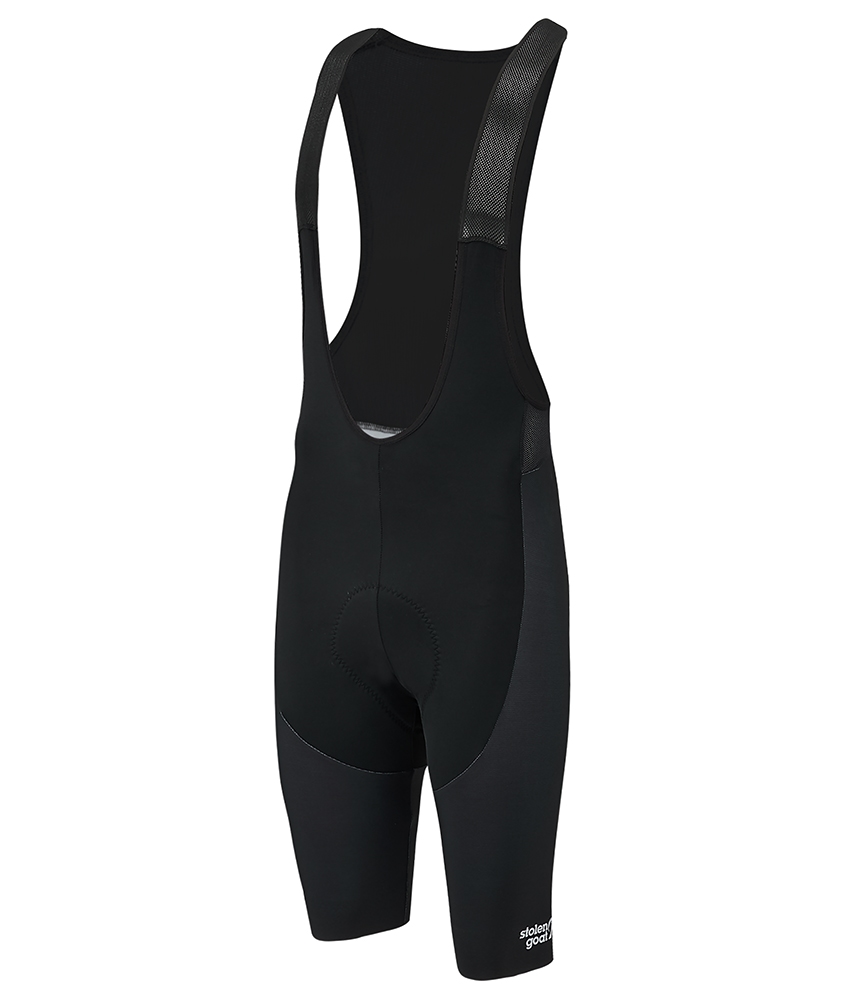
Advanced bib shorts: Our most advanced bib shorts yet (the clue is in the name), constructed with compressive fabric to support you all the way to the finish line, seamless hems and a dual density chamois for supreme comfort. Shop men’s Advanced bib shorts | Shop women’s Advanced bib shorts.
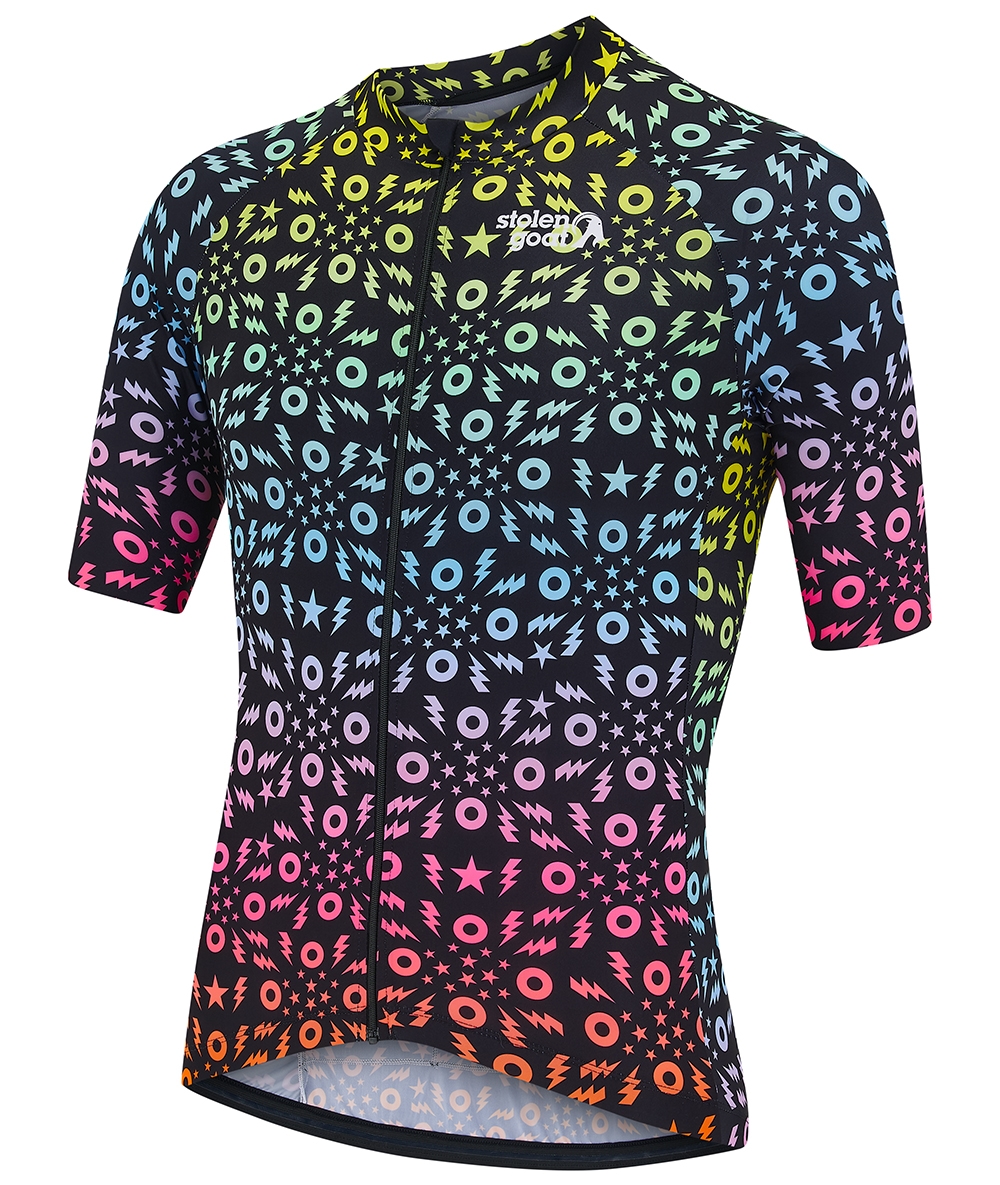
Kalahari Advanced cycling jerseys: The heat is on, the race is firing up… but you’re keeping your cool because you’re wearing a Stolen Goat Kalahari Advanced jersey. Ultra-lightweight, with an aerodynamic fit that doesn’t compromise on comfort, this is your go-to jersey for hard race efforts. Shop men’s cycling jerseys | Shop women’s cycling jerseys
Shop all women’s cycling kit | Shop all men’s cycling kit
Gravel cycling events
Gravel cycling events take the adventure off road! Gravel riding bridges the gap between road cycling and mountain biking: you’ll head off the beaten track but you won’t be encountering anything so technical that you need full suspension. Gravel cycling events tend to be similar to sportives – a non-competitive mass start event which is either entirely off road on gravel tracks, forest paths and trail, or a mix of road and Roubaix-style gravel sections. However, there are also competitive gravel cycling races such as the famous Unbound in Kansas, USA; the Dirty Reiver and Traka. And the UCI now has a Gravel World Series (introduced in 2022) with a series of qualifier events held all over the world in the build up to the World Championship race at the end of the season.
Mountain bike races
Next let’s dive into the world of mountain bike racing. There are four main mountain bike (MTB) racing disciplines, each testing different aspects of riders’ fitness, handling skills, and in some cases: pure bravery. The different MTB racing disciplines can also require different styles of mountain bike to suit the terrain and racing demands.
- Cross country mountain bike racing. A classic ‘bar-to-bar’ mass start racing discipline. Typically courses are short laps, with a mixture of terrain along the way including jumps, thrilling down hills and steep climbs. Because cross country mtb racing is all about who can get into the optimal position and get round the course fastest, riders tend to go for a hardtail bike with a range of gears to give the versatility required to pick up speed without grinding to a halt on the uphills. The shorter distance racing (typically lasting around 90 minutes) features in the Olympic cycling program, but ‘marathon’ versions also exist for those who prefer a longer ride.
- Enduro. This MTB race discipline involves several timed downhill stages, with untimed ‘liaison’ stages in between – the uphill ‘transfer’ between the downhills. The winner is the rider with lowest cumulative time on the downhill stages. Don’t take too long on the liaison stages though, they might not contribute to your overall time but you do still have to complete them within a set time limit!
- Downhill MTB racing. This is a bit like mountain biking’s answer to cycling time trials. Downhill racing is a you versus the clock effort, where the mission is simple: get down the descent as quickly as possible. There can be obstacles, technical twists and turns and jumps – so this is a discipline where strength, technical skill and a healthy dose of fearlessness is critical.
- Four-cross. High octane, high energy, high drama. Four-cross (or 4X) mountain bike racing is a bit like BMX racing. Four riders take on a downhill course in a head-to-head battle, with jumps and obstacles to tackle along the way.
Non-competitive cycling events: Audax and ultracycling adventures
Outside of sportives, there are also some other non-competitive cycling events that might peak your interest. Audax (aka Randonneuring) events are similar to a sportive, but they tend to be longer in distance. Riders must complete a set route within a specific time limit, passing by set check points or control points along the way. Unlike sportives, Audaxing places much more emphasis on self-sufficiency. You’re expected to carry your own nutrition, take care of navigation and manage any mechanical issues yourself. Check points are often at cafes or petrol stations, rather than dedicated aid stations, and it’s more about getting your brevet card (a physical or digital card that acts as your proof of passage for each check point) stamped, rather than providing you with aid or sustenance. Audax events are all about the adventure, and completing a route under your own steam rather than competing against other riders.
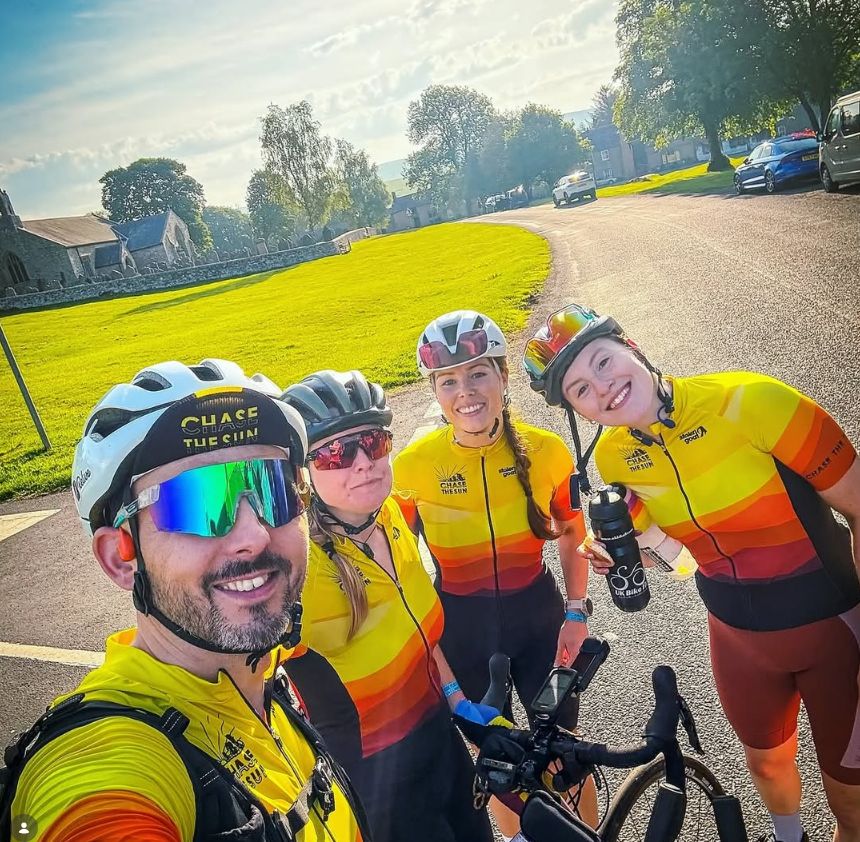
The same goes for ultracycling adventures. Events like Chase the Sun, a sunrise to sunset cycling challenge on the longest day of the year, aren’t concerned with how long it took you to complete the distance – it’s about getting from A to B and the experience you have along the way. And if you want a real cycling adventure, why not consider giving bikepacking a go?
Which type of cycling events are best for beginners?
So that’s a whistle-stop tour of the main types of cycling events you’ll come across. But if you’re just getting started, where should you start? It really depends on what you want to get out of doing an event, but to break it down:
Best beginner cycling events for a friendly, non-competitive environment
If you’re keen to experience the fun and camaraderie of lining up on a start line alongside other riders, without the pressure of a race. A cycling sportive is a great place to start. Events such as the UKCE cycling sportives have a variety of distances to suit different abilities. There’s plenty of on-course support (including aid stations and mechanics) so these events are a fantastic way to test yourself over a new distance, or just to get out and explore a new route with a whole bunch of other likeminded cyclists.
If you want even more of a challenge, then Chase the Sun is ideal as an ambitious goal – the same friendly, non-competitive vibe… just a bit of a bigger day in the saddle! Learn more in our Chase the Sun event guide.
Oh and while you’re here – did you know if you join us on our Stolen Goat Hub App you can unlock exclusive event discounts? It’s free to sign up, just connect with Strava. Check it out!
How to get into competitive cycling racing
If a bit of friendly competition gets your engine revving, then a great place to start is with a cycling time trial. This gives you the opportunity to race against the clock, while also trying to get the fastest time and beat other riders on the start list. You don’t necessarily need to be part of a cycling club to get involved with time trialling – there are plenty of ‘open’ events where you can just sign up and ride. Find a cycling time trial near you on the Cycling Time Trials website. Crit races can also be a great introduction to road cycling racing, because they typically take place on closed courses so you can focus on learning the pack dynamics and honing your race craft. Your best bet is to find a local cycling club who take part in competitive events – Learn more about getting into road racing on the British Cycling website.
How to prepare for your first cycling event
Once you’ve decide on an event, it’s time to get training! What you’ll need to do to prepare will depend on the event you’ve entered. But here are some general tips to get you started:
- Research the event you’ve entered. Check out the route, take a note of the event timings and any compulsory kit (such as lights) you might need. Do this well in advance to avoid any 11th hour drama.
- Give yourself plenty of time to train and build up your fitness. Even if your event is a little way off, it’s time to get riding. Check out our training tips section to get more insights – from how to how to build your endurance to the benefits of easy, zone 2 riding and how to get stronger at riding up hills.
- Practice your bike handling skills. Even if you’re not taking part in a competitive cycling race, working on your bike skills will set you up for a safe and enjoyable day out on the roads. Practice mounting and dismounting, coming to a stop at junctions and cornering. You’ll feel much more confident during a busy cycling event.
- Check your bike is in good working order. Don’t let a mechanical spoil your event! It’s good practice to give your bike a check every few weeks to make sure your brake pads aren’t worn, your tyres are in good condition and your gears are shifting smoothly.
- Practice some basic mechanical skills. Many beginner-friendly cycling events will have roaming mechanics, or mechanical support at aid stations. But there’s no guarantee, so it’s better if you can be relatively self-sufficient. Practice changing an inner tube and getting a dropped chain back on. Hopefully you won’t need these skills on event day, but it’s going to be far less stressful if you know you can get yourself sorted.
- Get comfortable cycling gear. We’re not just saying this because we create some of the best cycling gear out there for style and comfort… if your bike shorts are uncomfortable, your jersey makes you feel boil in the bag or your waterproof jacket is about as useful as a chocolate teapot, you’re setting yourself up for a miserable time. Time for a cycling wardrobe upgrade? Take a look at what’s new and trending.
Race day, Every Day and anything in between: Stolen Goat cycling event-ready kit
From our Endurance bib shorts made for big days in the saddle, to our wide range of cycling jerseys which perfectly balance ride all day comfort with ride like you mean it performance. Our cycling kit is here to take you from training day to race day without missing a beat. Check out some of our top picks below, or shop the full range.




Get more cycling event inspiration
- Bucket-list worthy cycling events: our top picks
- Chase the Sun event guide: Everything you need to know about this EPIC cycling adventure
- UK Cycling Events: Found out more about the 2026 sportive calendar
- How to get into bikepacking