

For any triathlon distance, having a race kit that’s comfortable and fit for purpose is essential. After all, with three sports to tackle a triathlon is tough enough without uncomfortable kit dragging you down! But when you step up to the full Ironman distance, choosing the best tri suit for the job is even more important. When you’re racing for 140.6 miles, and you could be out on the course for up to 17 hours – finding a tri suit which balances comfort, performance and practicality is key.
In our tri suit buying guide, 6-time Ironman finisher and Kona qualifier Jen Lucas-Hill (who’s probably worn more tri suits than regular clothes at this stage!) shares insights on how to find the best tri suit for Ironman racing.
Why it’s still worth wearing a tri suit for Ironman racing – and why getting the right triathlon suit matters
Before we dive into what to look for in a long distance tri suit, you might be wondering if it’s even worth wearing a tri suit at all for Ironman/full-distance triathlon. After all, it’s such a long day – surely a few extra minutes in transition to get changed for each discipline won’t matter? If you’re purely looking to complete and you’re not concerned about your finish time, there’s absolutely nothing wrong with getting changed during an Ironman. But wearing a tri suit not only saves you time in transition – a tri suit is also more practical, faster out on the course, and can actually be more comfortable for a long day of racing. Here’s why it’s worth wearing a tri suit for an Ironman, even if you’re not challenging the podium:
- It’s practical. Pockets for your nutrition, purpose-built with materials designed to be fast-drying, quick-wicking and cooling. Minimal seams to reduce chafe. It might not look it – but a tri suit is more practical, and more comfortable for a long day of swim-bike-run.
- More aerodynamic. The best tri suits feature a close-yet-comfortable fit and carefully engineered aerodynamic fabrics. That’ll help you to ride faster for less effort on the bike. Over 180km, even the smallest of marginal gains can make a significant difference. Many tri suit brands will express how aero their suit is through the number of watts it will save you on the bike (i.e. how much extra power you would have to push through the pedals to achieve the same speed). This can vary, but let’s take an average of 8 watts. Using the modelling on Best Bike Split, an 8 watt saving over 180km for an average amateur bike split of 6-6.5hrs may equate to up to 9 minutes saved. Without having to go any harder.
- Saves you time. If you’re chasing the age-group podium or a world championship slot, every second counts – even over the Ironman distance. But even if you’re focused simply on making it to the finish line, the time you’ll save by not having to get changed in transition could end up being make or break. Changing into cycling kit after the swim and then running kit after the bike could quite easily add 5-10 minutes on to your race time. If you’re going to be close to the cut-off times, that could end up being the difference between getting your finisher medal and getting a DNF. It’s just not worth the risk, when instead you can find the right tri suit which will keep you comfortable, and help to keep you ahead of the cut-off times.
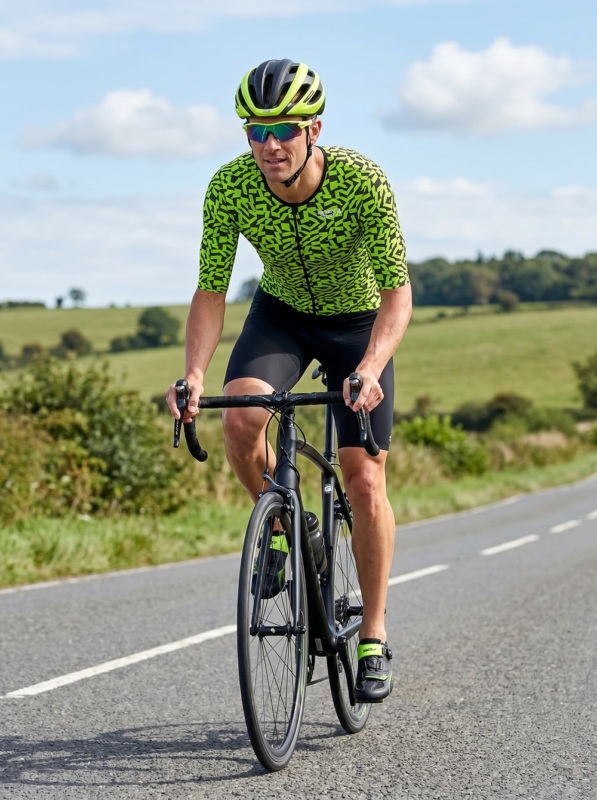
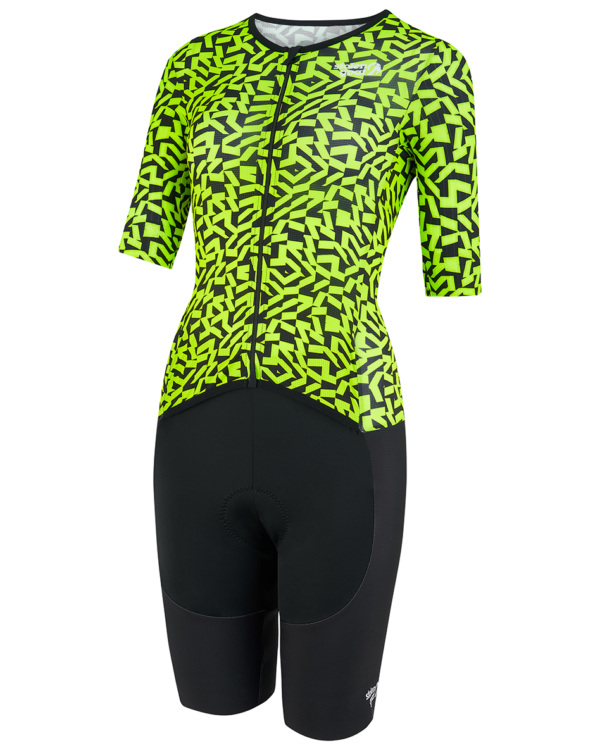
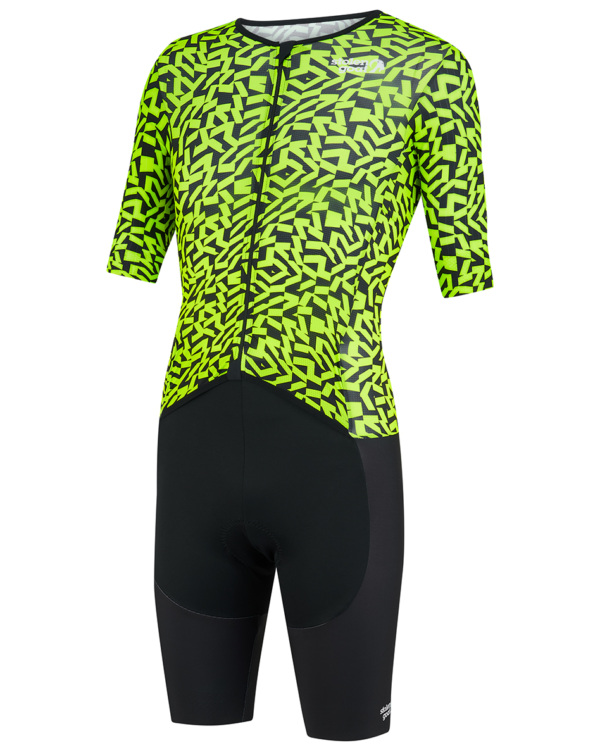
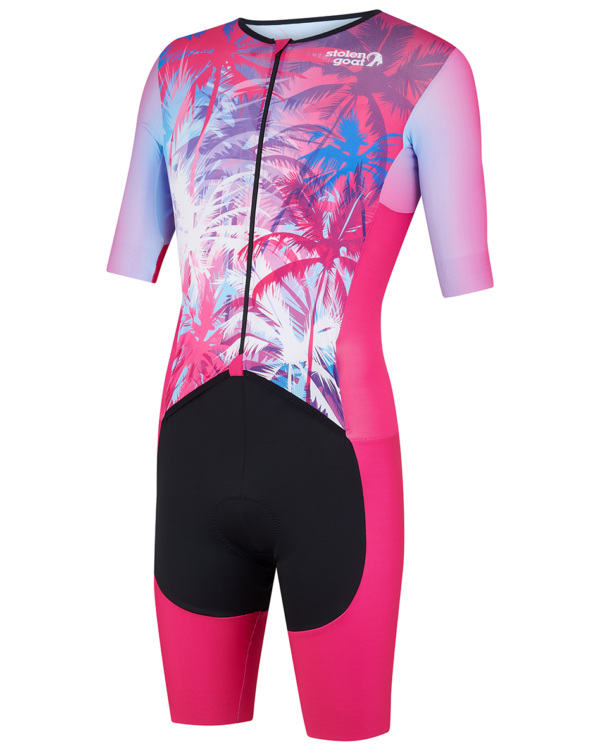
Featured: the Audio tri suit, available for men and for women
Why tri suit choice matters for long distance triathlon events
There are so many options out there when it comes to choosing a tri suit. For long distance racing, finding the right suit for the job becomes even more important. Small inconveniences like scratchy seams or too-small pockets might not bother you that much over short distances. But when you’re racing for anything between 9-17 hours, what starts as a minor bit of discomfort can soon turn into race-ruining chafe – and not having enough pockets for your nutrition will get old pretty quickly. We’ll take a look at everything you need to look for to find your perfect long distance tri suit next. But the bottom line is – an Ironman is tough enough, so you want to make sure your tri suit balances comfort, performance and practicality so the race doesn’t hurt anymore than it really has to!
Long distance tri suit buying guide: Key features to look for to find the best tri suit for Ironman triathlons
Alright, now we’re all firmly on team ‘wear a tri suit for Ironman distance racing’, let’s take a closer look at the features you’ll want in your perfect long distance triathlon suit.
Fit and construction
For full distance triathlons, I’d recommend choosing a tri suit which has a full ‘butterfly’ opening – this means the top section unzips like a cycling jersey. This gives you a little extra wiggle room for the longer swim distance and the extended time you’re going to be spending in your aero bike position. It also makes it significantly easier to get the suit off should you need to make use of the on-course toilets. Trying to struggle out of – and back into – a sweaty tri suit when you’re in a rush is surprisingly difficult. A full butterfly zip makes it feel less like you’re an octopus in a post box.
Beyond the construction of the suit, you want to ensure it fits you comfortably. I’ll share some top tips on how to check your tri suit fits later on in this blog post. But for now, you want a tri suit which fits close to your body without being at all restrictive. Look for premium fabrics with 4-way stretch – the tri suit will be able to move with you, rather than work against you. If in doubt, a slightly looser fit is going to be better for Ironman distance racing compared to struggling against a suit that’s too tight. Restricted blood flow and painful chafing isn’t a recipe for Ironman success.
Long distance chamois pad
The right chamois pad is crucial for Ironman racing because not only are you going to be on the bike for 5 hours+, you’re then going to have to run a marathon. Too bulky, and it’ll hold water, bunch up and cause chafing. Too thin, and you’ll be in a world of pain a few miles into the bike. The best tri suits for Ironman will come loaded with a premium chamois pad designed to offer just the right level of support without getting in the way on the run, with low profile seams to minimise saddle sores. Once you’ve found a suit you like the look of, check the chamois pad details carefully before you commit to make sure it’s designed for long distance and it’s sex-specific – male and female anatomy requires different distribution of support so avoid a one size fits all undercarriages approach!
Breathable materials
Managing your body temperature is really important for long distance racing, so make sure your tri suit has been created with breathability in mind. Once your core temperature rises, it can be difficult to get it back down and that’s a real performance-dampener.
Aerodynamic upper body and sleeves
More on the sleeved vs sleeveless tri suit for Ironman racing later. For now, let’s focus on fabrics. As I mentioned earlier, an aero tri suit can save you a decent chunk of time on the bike over the full distance. Look for a tri suit which features textured material on the sleeves and/or upper body. You might assume smooth fabric would be faster, but slightly raised material (such as bumps or aero stripes) causes a small layer of air to form on the surface of the tri suit, which actually reduces your overall drag and allows you to cut through the wind faster. The new Stolen Goat tri suits feature aero fabric on the sleeves which creates this boundary layer turbulation, saving you watts on the bike. In an Ironman, anything you can do to help you make forward progress faster without extra effort is going to be a win.
Pockets
Some tri suits which are designed for the full throttle speed of short course racing are minimal on the pocket front. After all, you don’t need to carry all that much for a sprint race. But in an Ironman, you need big enough pockets to store your nutrition comfortably and securely. The Stolen Goat tri suits now feature side access rear pockets: these will be deep enough to keep your gels safe on the bike and the run, but they’re also more aerodynamic and if it’s a non-wetsuit swim, they cause less drag in the water compared to traditional vertical pockets.
Stand out style
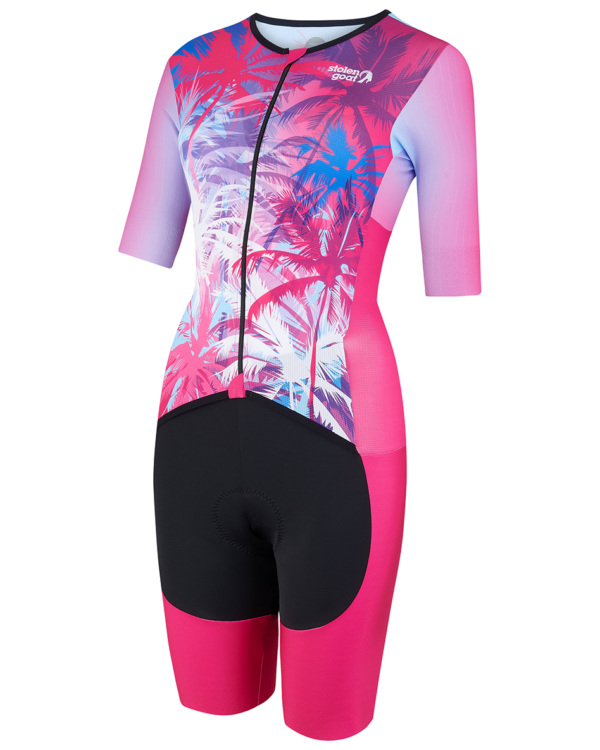
Beyond the fit, function and features – your tri suit needs to look epic! A design that stands out will not only make for awesome race photos (which you deserve after all those long months of training), it’ll also help your support crew to spot you on the course. A few years back I raced in the much-loved Stolen Goat ‘jellyfish’ tri suit, and on a multi-lap course I had total strangers yelling “go on jellyfish girl” at me because they recognised the suit. A big boost in morale!
Sleeved or sleeveless tri suit for Ironman racing: which is better?
Throw it back to the 80s and 90s and you’d spot triathletes racing in swim suits, budgy smugglers and vest tops. Never mind the tan lines, think about the chafing! Ouch. It’s safe to say, triathlon apparel has come on leaps and bounds since then to optimise for performance and comfort.
Some athletes choose to race full distance triathlons in a sleeveless tri suit because they find it more comfortable (for example, not having sleeves under their wetsuit during the swim). However, most triathletes now opt for a sleeved suit. That’s because fabric is faster than skin when it comes to aerodynamics. And when you’re out on the course all day, having extra protection from the sun is always going to be a good thing.
Ultimately, you should race in what you feel most comfortable wearing – but if you’re torn between the two, I’d suggest going for a sleeved suit for optimal performance.

Featured: the Aloha tri suit, available for men and for women
How should a tri suit fit for Ironman distance racing?
Finding the right tri suit is one thing, but getting the right fit is just as important. When you try the suit on, it should give you a close but comfortable fit. No excess fabric to bunch up or flap in the wind, but equally the material shouldn’t be so stretched that it’s straining at the zip or going see-through across your hindquarters!
A well-fitting tri suit shouldn’t restrict your range of movement through your shoulders – another plus one for a butterfly opening as it gives a little more vertical movement when you take your arm overhead compared to a pure all in one. The leg grippers should feel secure, but they shouldn’t be digging into your thighs and cutting off circulation. And finally, you should have enough ‘give’ in the suit that you can load up the pockets.
Remember that tri suit sizing can be quite different to your every day street clothes and even your cycling kit, so check the size guide carefully and take the time to check your measurements rather than guessing! If you’ve got your eye on a Stolen Goat tri suit, our friendly customer service goats will always be more than happy to help you find the best size so don’t hesitate to get in touch.
How to check your tri suit fits correctly for Ironman racing – top tips
Just got your new tri suit? Here’s a few handy tips to make sure it fits and it’s going to be comfortable enough for race day:
- Don’t just try it on standing bolt upright. You’re going to spend most of race day in your cycling position, so make sure you can comfortably lean forward and get down onto your aero bars without feeling restricted.
- Swing those arms! Look, the swim in an Ironman is tough enough without a too-tight tri suit pinning your arms before your sides. Avoid unplanned doggy paddle and give your arms a swing when you try on your new race suit to make sure you can get full range of movement. Keep in mind you’ll likely be wearing it under a tri suit, so any restriction and you might want to size up.
- Pocket check. Test out putting some gels (or whatever nutrition you’ll use) in your pockets to make sure there’s enough give in the fabric, and to make sure you can comfortably reach back and grab stuff.
The Stolen Goat triathlon collection: find your perfect Ironman tri suit
Our latest range of tri suits have been meticulously designed to offer next level comfort and performance, perfect for Ironman distance racing. We worked closely with a multiple-time Kona finisher to get all the finer details just so – anything less just wouldn’t be up to the job. Ready to unlock your best triathlon performance yet? Check out our latest tri suits: