

It’s peak triathlon season. And with the UK delivering a summer for the record books, those racing over the next few weeks are going to have some pretty unexpectedly hot conditions to deal with! To help you get ready to face the heat, IRONMAN Kona finisher Jen Lucas-Hill shares some top tips for racing in the heat.
How to race a triathlon in hot conditions
Swim, bike, run, try not to melt. Racing a triathlon in the heat adds a whole extra level of challenge to proceedings. I’ve raced in hot conditions several times over the years – sometimes knowing what I was walking into: last year’s IRONMAN World Championship in Kona being a great example. But most other times, I was faced with an unexpected heat wave and little time to prepare. There was the time I signed up for IRONMAN Zurich expecting fresh alpine climes, only to be hit with 36 degree temperatures come race week. Or in 2023, when a September Ironman distance race in the Netherlands (which I’d spent all summer assuming would be cold and wet) felt more like racing someplace tropical. And don’t get me started on the time I was sent out to Singapore to cover the T100 pro race for TRI247, only to be asked the day before I flew out to jump in and race the age group 100km for the sake of ‘content’ (on a rickety rental bike with no heat prep).
I’ve had my fair share of slogging it out in the heat over the years, which has meant I’ve learned a few vital lessons along the way. If you’ve got a race coming up and you’re worried about how the heat might impact your performance, read on to get my top tips that’ll help you to keep your cool and make it to the finish line – without any major meltdowns.
Keep calm, and adjust your expectations
If your race is unexpectedly hot, the first thing is to A) not panic, and B) adjust your expectations. We know that hot conditions place significantly more physiological strain on the body, and without a dedicated block of heat training, it’s unlikely you’re going to be able to go as hard or as fast as you might in cooler temperatures. And that’s okay! It’s the same for everyone. The difference between being able to take hot conditions in your stride, and blowing up spectacularly is the ability to manage your effort, to accept it’s unlikely to be a PB day and listen to your body. Those who fail to do that, and try to push through as if the heat wasn’t a thing, will end up burning all their matches and finishing far slower (if at all) compared to those who race to the conditions in front of them and pace themselves.
Top tip: In hot conditions focus on process goals and/or your place versus the rest of the field rather than getting too hung up on your overall finish time. It might not be a day to hit a personal best, but there’s still a huge amount of satisfaction to be found in managing yourself well in the conditions, nailing your pacing, fuelling and hydration and being able to keep it together and finish strong when others in the field are wilting.
Keep out of the sun as much as possible pre-race
Between the expo (if there is one), standing in line for registration, bib pick up and bike check-in… it’s way too easy to spend hours on your feet in the scorching sun the day before your race if you’re not careful. Which is a recipe for dehydration and exhaustion before you’ve even donned a tri suit. Be really mindful about what you’re doing the day before your race (and in the final hours before you hit the start line). Minimise time on your feet, stay in the shade as much as possible and stay hydrated.
Start already hydrated
Drink up before you hit the start line, otherwise you’ll be firefighting from the off. You’ll be sweating more in general (even at rest) during a heatwave so consider using electrolytes to supplement the losses and reduce the likelihood of muscle cramps. Keep a bottle to hand at all times during race week and sip to thirst. Hydration is key for an effective carb load – the body actually cannot effectively store glycogen if you’re not properly hydrated – so it’s important to get enough fluids on board. If you’re struggling with appetite while trying to carb load, ruit juices and high-sugar soft drinks are a great way to get extra carbs on board during a heatwave as they’re refreshing and deliver a high amount of carbohydrate without making you feel overly full or bloated. The night before your race, consider pre-loading with electrolytes (I use a precision hydration 1500mg tablet in a 500ml bottle of water) and do the same on race morning alongside your normal pre-race breakfast.
Don’t waste energy panicking about a non-wetsuit swim
We triathletes tend to have a bit of a co-dependent relationship with our neoprene. So if it’s suddenly a non-wetsuit swim, you might be freaking out a bit. The thing is, panicking about it won’t change the situation and you’ll just waste a bunch of mental (and physical) energy stressing. It is what it is, and it’s the same for everyone. Accept that your swim split might be a bit slower (but remember you’ll save time in T1 because you won’t have to remove your wetsuit) and focus on swimming smooth, with a gentle kick (if you tend to not bother kicking in a wetsuit) to facilitate a better body position in the water. Really think about your head position too and think ‘crocodile eyes’ for sighting – it’ll help to reduce how much your legs drop.
Take a proactive approach to cooling
Performing well in the heat is all about being proactive and taking measures to keep your core temperature down before you feel yourself starting to overheat. If it’s a really hot day, consider taking an extra bottle of water with you to the swim start to pour over yourself while you wait to start the race. I did this at Singapore T100 and it made a huge difference. In the UK, it’s likely the water temperature – while warm enough to warrant a non-wetsuit swim – will still be cool relative to the air temperature. But if the water is really warm (in Singapore it was close to 30 degrees celsius in the water) it might also be a good idea to have a bottle of water in T1 to pour over yourself to cool down.
Once you get on the bike, even if you don’t feel that hot, it’s still worth grabbing water bottles at the aid stations to pour over yourself. This will help to keep your core temperature down which will pay dividends when you hit the run course. On the run, use ice (if provided) from the aid stations: shove it down your suit, put it in your hat. I interviewed Lucy Charles-Barclay before the 2024 Singapore T100 race and her top tip for age groupers was to hold ice cubes in your hands as well. I tested it on race day and it genuinely did make a huge difference. It’s something I’ve done ever since, and it Kona between that and having a freezer’s worth of ice dumped down the front of my suit I was able to just about keep moving on a day when even the pros were dropping like flies!
Put sunscreen in your transition bags
I promise, the pain of an Ironman’s worth of sunburn is not worth the 30 seconds or so you’d save in transition by not reapplying your sunscreen. Sports-specific brands like Pelotan offer small roll on sunscreens so you can really quickly reapply to your arms, legs, face and neck without losing too much time. As much as we all want a decent finish time, nothing is worth risking your long-term health for. I missed a patch on one of my legs in Kona and over 9 months later I’ve still got a scar from how bad the sunburn was. Make Baz Luhrmann proud and wear sunscreen.
Race smart and manage your effort
Your body is going to be working over time to thermoregulate, so you need to manage your effort appropriately. I like to use heart rate in tandem with power and pace in hot conditions, because when the heat is on what might normally be a sensible output could actually be putting you way too far into the red. Set yourself a maximum limit for heart rate on the bike and the run (what training zone this is will depend on the distance you’re racing) and stick to it. It might feel like you’re not pushing hard enough early in the race, but compared to those who overcook it and blow up – you’ll end up finishing far stronger. Hold your nerve, race your own race and trust the process.
Consider using a hydration pack or carrying bottles on the run course
Under normal circumstances, triathlons usually have frequent enough aid stations that you can just pick fluids up on the fly. But in hot conditions, the 1-2 miles between aid stations can feel like an eternity. I’ve learned this the hard way! If it’s a really hot day, consider either popping a hydration vest (with flasks or a bladder) in your T2 bag, or some extra water bottles to carry. This will allow you to drink to thirst and get the fluids in consistently, rather than gasping for water between aid stations. For an Ironman-distance race if it’s a really hot day, I’d actually recommend freezing your bottles the night before so there’s half a chance the water in them will still be cold by the time you hit the run course. I wish I’d done this in Kona, as the water in my run bottles was a bit like drinking hot bath water…
Choose your race kit wisely
Racing in hot conditions requires kit fit for the job. Opt for lighter colours, and super breathable fabrics. If you plan to race in an aero helmet, make sure you’ve tested it in hot weather to ensure it offers enough ventilation. Wear a cap for the run – it keeps the sun off your face and you can load it up with ice at the aid stations. Remember that you’ll be sweating a lot more than usual, so chafe can become more of a factor. Use anti-chafe (or just vaseline) liberally. I’d recommend actually putting a layer of it on the inside seams of your tri suit/sports bra as well as on your skin.
Know the signs of heat stroke – and know when to stop
If you find yourself feeling dizzy, disorientated or faint, you stop sweating and/or start getting the shivers – it’s time to pull the plug on your race. These are all signs of heat stroke, and left unchecked things can take a turn for the worse pretty quickly. Heat-related illness can have long-term impacts on your health, so no medal or finisher shirt is worth the risk – however tempting it might be to try and push through. There’ll always be another start line. But you only get one body, so look after it!
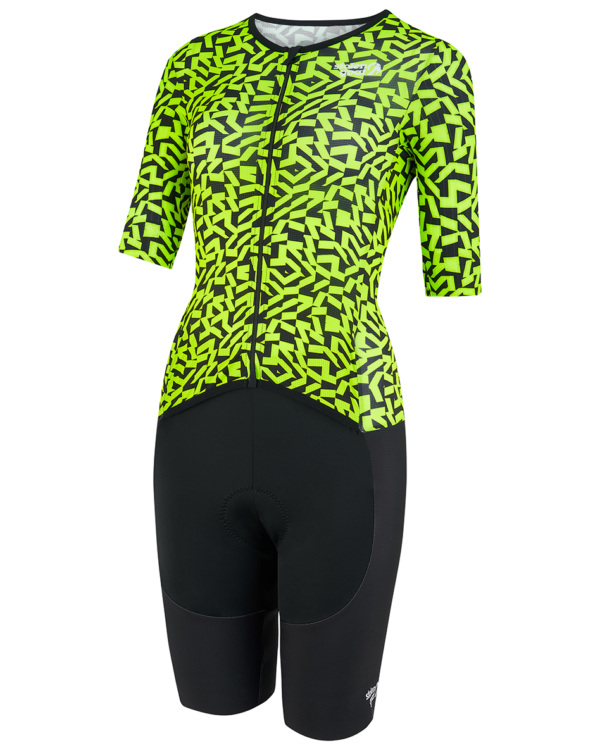
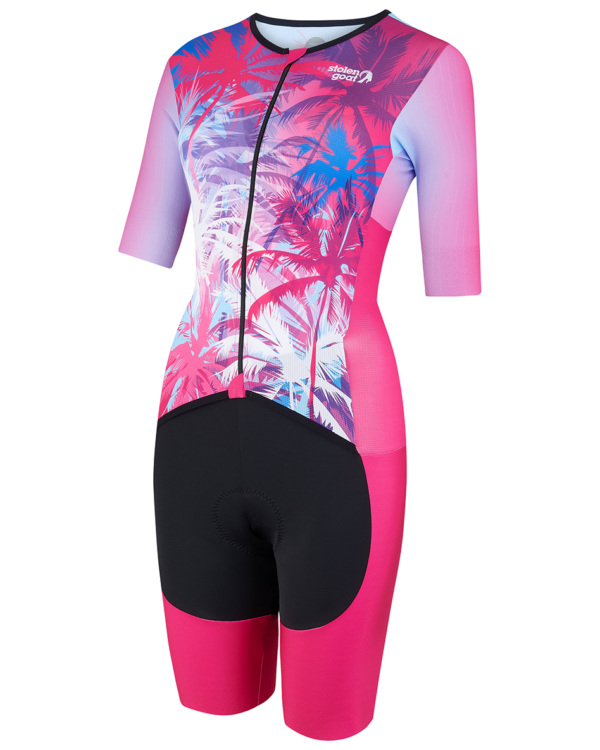
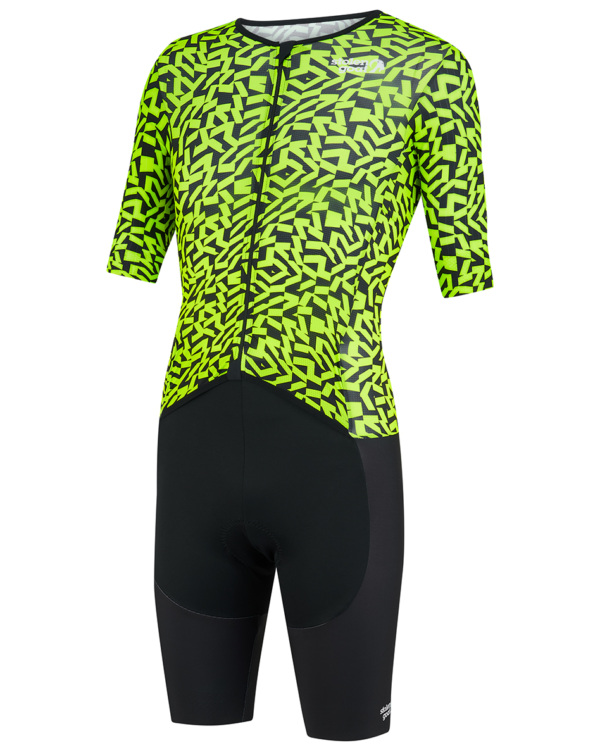
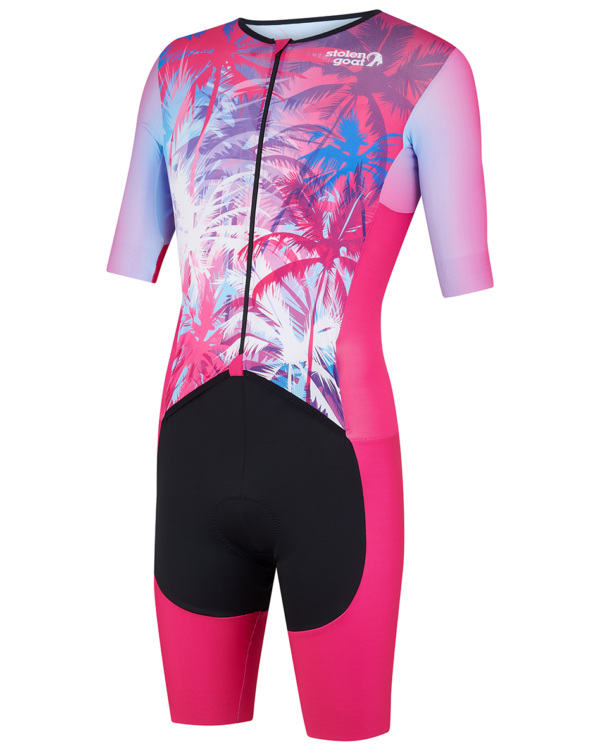
Stolen Goat tri suits
Stolen Goat’s tri suits were already award-winning. But this year they’re back and better than ever. Offering the ultimate balance of aerodynamic performance, breathability and race-all-day comfort – these are pro-level tri suits, made with you in mind.