



If you want to get faster at triathlon, you’ve just got to train more and push harder… right? It’s true, to some extent. But plenty of triathletes – newcomers and seasoned age-groupers alike – are leaving performance on the table. They’ve done the training, they’re ready to roll: but they’re forgetting about some of the low hanging fruit that taken care of, can easily shave minutes off their finish times.
Looking to make every minute count and get the triathlon personal best finish in the bag? Get our top 5 hacks that’ll help you to achieve your potential come race day.
Practice your transitions
We’ve all been there. Rolling around on the floor like a fish out of water desperately trying to get your wetsuit off. Fumbling with bike shoes. Almost heading off on the run with your bike helmet on. When the pace is on and adrenaline is high, it’s easy to make silly mistakes or get flustered – costing you vital time in transition. While it’s not as fun or as exciting as smashing out a training session and raking in the kudos on Strava. Taking time to run through your transitions in training gets the process in to your muscle memory so that, come race day, you don’t even have to think about it.
It might only be a couple of minutes, but speeding up your transitions is a simple way to move up the results list. Practice getting your wetsuit off as fast as possible after your next lake swim. Treat your bike-run brick sessions as an opportunity to rehearse going smoothly from bike shoes to run shoes. And don’t neglect your mounts/dismounts! Practice running with your bike to a pretend mount line and getting clipped in and on your way as fast as possible. It’s amazing how much time you can lose just getting out of transition and over the bike mount line.
Transition hack: If you’re racing longer distances and you’ve got to load your pockets up with nutrition in T2, don’t waste time doing it in transition. Instead, put all your run nutrition into a small sandwich bag. Grab this in T2 and run with it – you can fill your pockets during the first kilometre of the run.
Nail your race day nutrition – and your carb load
Don’t let annoying stomach issues or running out of fuel ruin your race. Practice using the nutrition you intend to use during your race in your training sessions, so you know what works and what’s likely to leave you diving into the porta-potties.
Planning in a ‘race simulation’ training day is a great way to really put your nutrition (and the rest of your race kit) to the test. Take note of how you felt during the session. If you were lacking in energy, feeling dehydrated or experiencing any GI issues – it’s time to refine your fuelling strategy.
Don’t forget to practice your pre-race carb load too. This is where so many triathletes inadvertently set themself up for GI distress! Have a dress rehearsal of what you’ll eat the day before your race before a big training day. Use this as an opportunity to see what sits well in your stomach, and what timing is best to ensure you don’t wake up feeling bloated and sluggish on race day.
Carb-loading tips:
- Have your largest carb-load meals at breakfast and lunch, followed by a lighter dinner. This gives your body time to convert the carbs into glycogen and digest everything properly so you don’t feel bloated on race morning.
- Don’t forget to hydrate properly. Your body needs plenty of fluids to digest the carbohydrates and store them optimally, so drink up (and add electrolytes if the race will be a hot one).
- Carbs doesn’t just mean bread and pasta. Struggling to get enough down the hatch? Most people assume carb loading is just eating endless bowls of pasta. In reality, you can use things like fruit juices and sweets to top up your intake without feeling over-full – these are high in carbs, but low in bulk so they’re ideal.
- Avoid too much fibre or fat. Keep it simple, plain and easy to digest. Skip the chickpea curry or the bean stew – that’s a sure-fire recipe for gastric fireworks on race day!
Upgrade your tri suit
Clearly, if you’re not even wearing a tri suit and getting changed between each discipline you can save yourself some significant chunks of time by just opting for a tri suit in the first place. But if you’re already a tri suit-wearer, consider an aero upgrade! Particularly pertinent for middle and long distance racing, aero fabrics on tri suits help you to cut through the air more efficiently. You’ll ride faster for the same effort, and over longer distances this aero ‘watt saving’ can add up to taking minutes off your bike split (without having to ride any harder). Faster split, fresher legs – and potentially a quicker run split to boot.
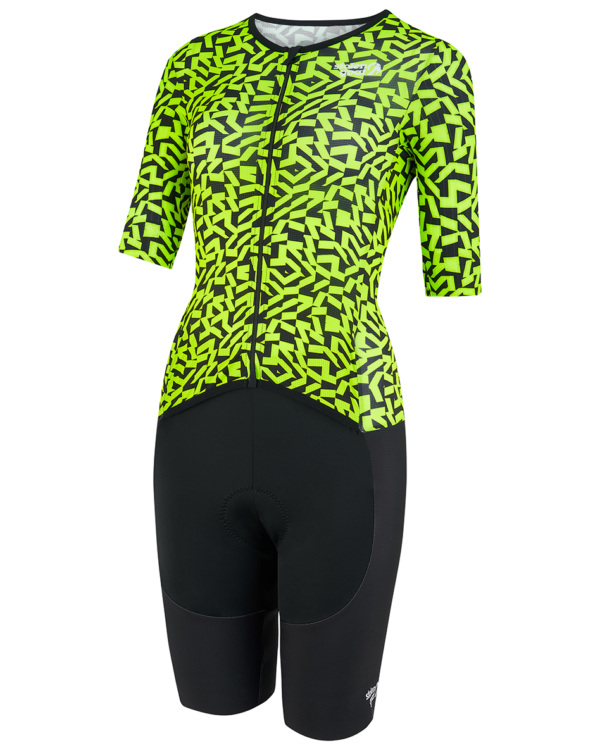
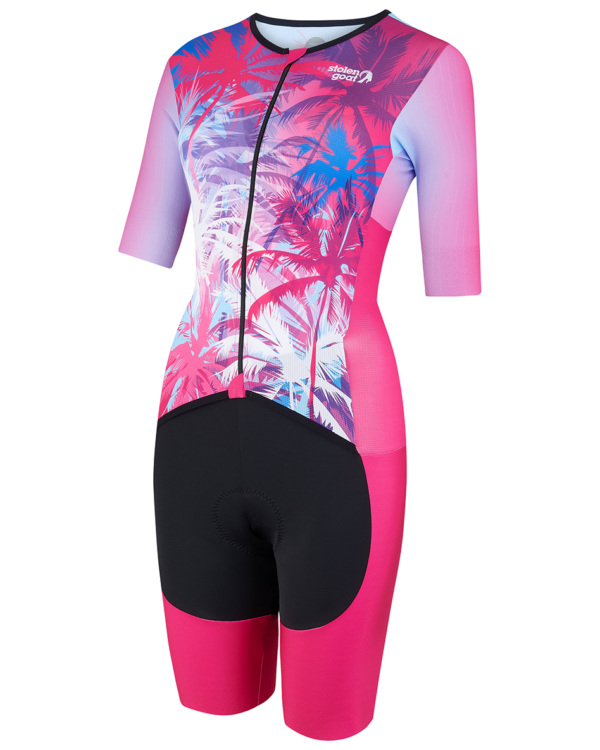
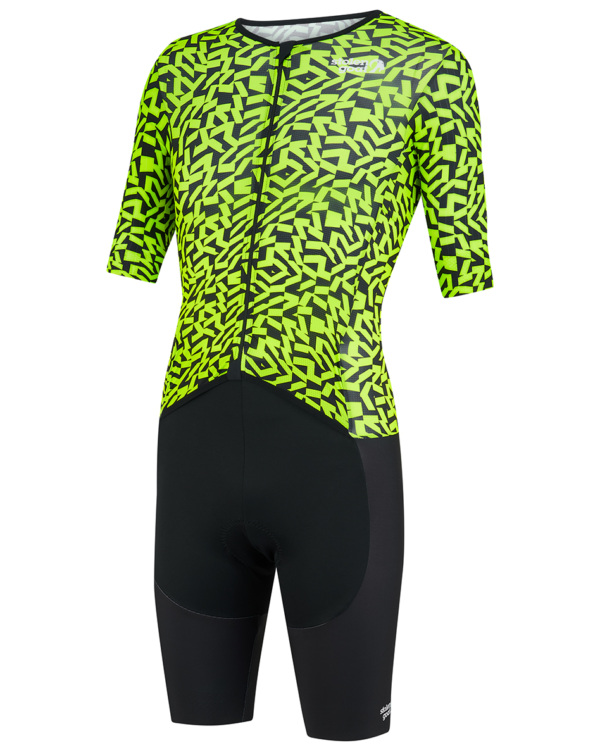
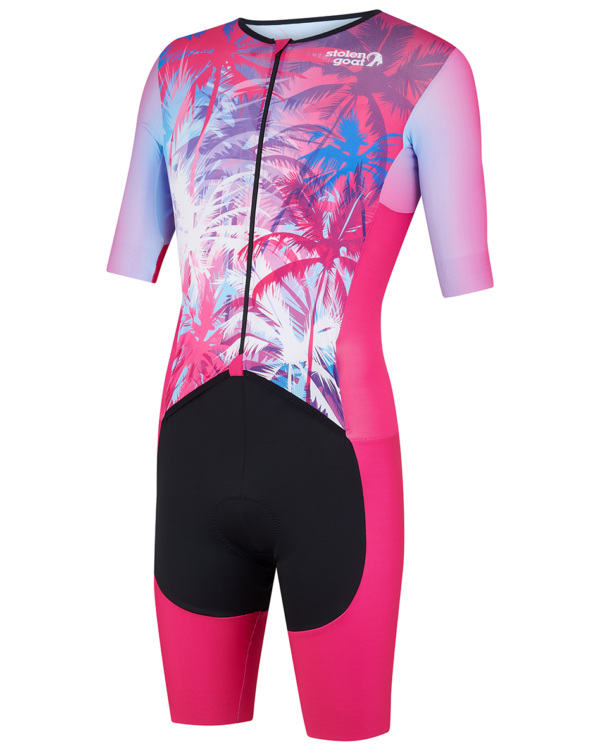
Shop Stolen Goat aero tri suits >>
Perfect your pacing
Poor pacing is one of the mostly costly race day mistakes. Triathlon is an endurance event. It’s all about being able to pace yourself to put together your best combination of swim, bike and run that gets you to the finish line fastest. Riding super fast on the bike might feel awesome. But if it means you end up overcooked and having to walk the run course, you’ll lose valuable time. Those competitors you overtook will soon be showing you a clean pair of heels, and you’ll end up finishing way slower than if you’d just held back a touch on the bike.
Ultimately, it’s a balancing act: “how hard can I get away with pushing on the swim and the bike without blowing up on the run?” It takes race experience to get this balance nailed, but it’s definitely something you can practice in training by executing back-to-back bike-run sessions. If you use measures such as power and heart rate, you can also use these to set an intensity to work at (for example a percentage of your Functional Threshold Power, or max heart rate) so you can ride with confidence that you’re leaving yourself enough energy for the run.
Come race day, it’s all about staying calm and sticking to your race plan. When the adrenaline flows, it’s easy to get carried away and put yourself into the red without meaning to. Keep controlled and race your own race. It’ll pace dividends in the closing kilometres when you can pick up the pace while everyone else starts to slow down.
Get your head in the game
Racing your potential is just as much about your mental game as it is about your physical fitness. There will inevitably come a point in the race when that little voice in your head starts telling you to slow down. When you’re pushing hard, it’s often your brain that wants to give up before your body actually needs to. Being able to dig deep and find a way to keep pushing when you’d really like to stop is the key to being able to move past your perceived limits and take your performance to the next level.
How you do this is very much an individual thing. It might be having a mantra to repeat, or reflecting on the hard training sessions where you proved to yourself that you’re strong and capable. It might be shifting your focus to something other than how hard the effort is. For example by taking in the crowds or reciting your favourite song lyrics.
Sports psychologist Dr Josephine Perry has some great tips for this in her book, Performing Under Pressure. Being able to get a handle on your pre-race nerves, and find the mental reserves to dig deep and test your limits on race day can be a game changer when it comes to truly racing to your potential. We invest so much time and energy into training our bodies, so it’s important that we don’t forget to work on our minds while we’re at it!
Stolen Goat tri suits: performance meets comfort, with signature SG style
Developed with input from a multiple Kona-qualifier, our tri suit range is here to help you perform at your best – and look epic while you’re doing it. Premium fabrics, a comfortable fit and high performance aero tuning. Everything you need to race strong, all day long.