

Whether you’re a first time triathlete or a seasoned multi-sport racer getting ready for your first start line of the season. The nerves and excitement before a race can make all the pre-race admin feel a bit overwhelming. And that’s where silly mistakes and night before panics start to happen.
In our triathlon pre-race checklist, 6-time Ironman finisher and Kona qualifier Jen Lucas-Hill is here to help you tick off all the finer details. So you can focus on getting your head in the zone and make sure you arrive at the start line with everything you need to have a great day of swim-bike-run – without any last minute drama!
What to do 2-4 weeks before a triathlon
By now the training is starting to wind down as the start line looms closer. This is a great time to focus on your final race day preparations and reduce the likelihood of any last minute chaos or drama during race week. Here’s what to do:
Practice your carb load and your race nutrition
Most of us practice with our race nutrition, but not many people think about testing out their carb load. And what you eat the day before your race can often be the culprit of any surprise GI issues come race day, so don’t leave it to chance! What you’ll need in terms of grams of carbs per kg of bodyweight is highly individual and depends on your race distance – but you can access expert guidance such as The Fuel HQ’s free carb load planner to help you tailor your approach.
The day before your last big training session, do a test-run of your carb load and take note of what you ate and when. During the session itself, fuel as you intend to during your race. Take the time to reflect on how you felt, if there were any issues and if anything needs changing.
Check your nutrition and hydration supplies
Hands up who’s had to pay a fortune for next day shipping and had a stressful 24hrs obsessively refreshing the tracking because you forgot to re-order your race nutrition until the 11th hour!? Yep, we’ve all been there. A couple of weeks before your race, go through your nutrition and hydration supplies. Work out exactly how much you need to take with you out on the race course and make sure you’re going to have enough. Order top ups with plenty of time so you’re not stalking the post-person.
Do a full kit and bike check
Get all your race kit out: wetsuit, tri suit, bike shoes, running shoes, goggles – the works. Try everything on to make sure it’s all in working order and fits you properly (you’d be amazed at how many ‘well, let’s hope my wetsuit still fits’ conversations you’ll overhear in transition) so if you need to order any new gear you’ve got time.
Now is also the time to give your trusty steed a once over – ideally 3-4 weeks out from your race. Check your tyres for any big cuts or significant wear. Go through your gears and make sure they’re indexed properly. If in doubt, get your bike booked in for a quick pre-race tune up service with your local bike shop to give you peace of mind.
Race-ready tri suits
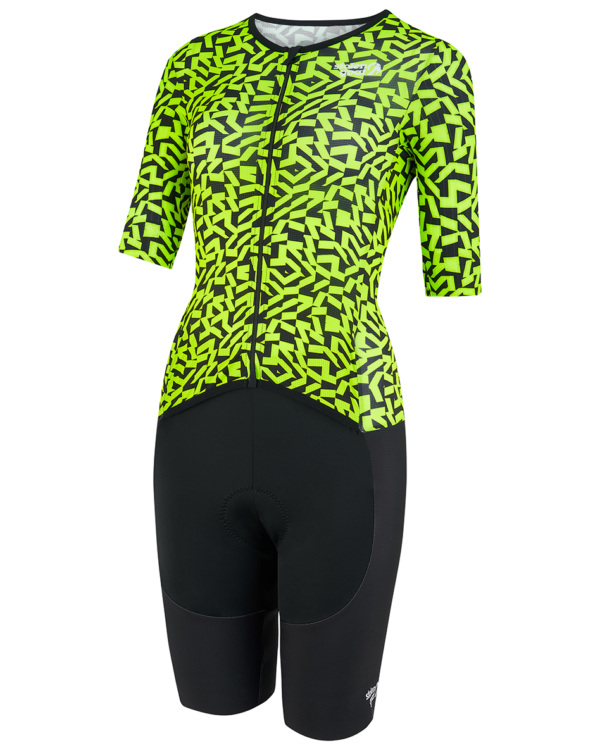
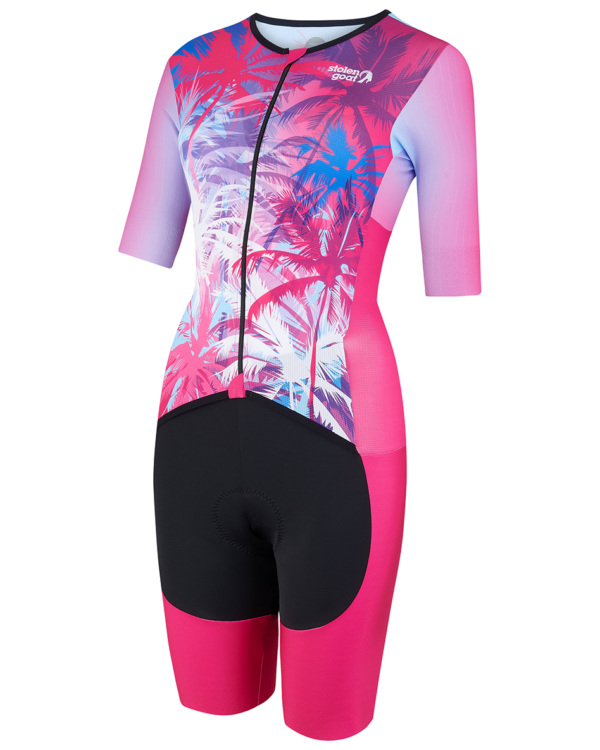
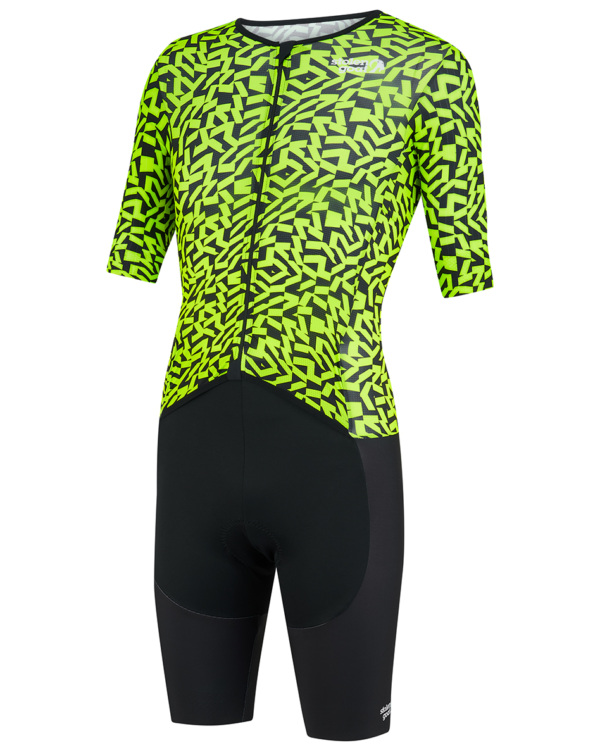
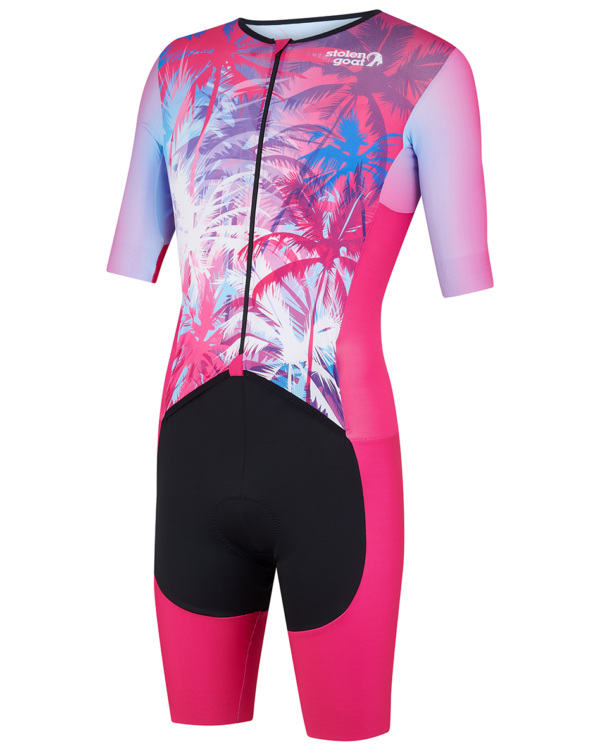
Last season’s race kit looking a bit sorry for itself? Check out the latest Stolen Goat tri suits. Designed with input from a multiple-time Kona qualifier, built with you in mind.
Check your puncture repair kit
It’s easy to forget that you used your last inner tube or gas canister until the moment you need it. Do a stock take on your puncture repair kit to make sure you have everything you need should a minor mechanical strike on race day.
Practice your bike mounts and dismounts, and your transitions
This is something I do before every race. Having spectated at as many Ironman triathlons as well as racing plenty myself, it’s amazing how much time people lose just trying to get on and off their bike! Practice running with your bike, getting on smoothly and dismounting. Ideally you want to do this before and after a long ride so you’re used to how it feels with tired legs.
This is also a good time to practice your transitions. Run through what you’ll need to do and in what order for swim-to-bike and bike-to-run. Smooth is fast and getting transitions dialled can easily take a few minutes off your finish time – so it’s worth the effort.
Make your ‘things that could go wrong’ list
This might sound wildly negative and counterproductive, but I’ve actually found it’s a really great way to calm the pre-race nerves and control the controllables. A couple of weeks before your race, make a quick list of anything you’re worried about and anything that could go wrong. You can rationalise some of them (particularly if they’re out of your control) and make contingency plans for the others. For example: “what if I get a puncture and I can’t fix it” is a common worry amongst triathletes. You can then practice changing an inner tube and run through the process at home, so if it happens on race day you’ll be less likely to panic. I’m famously mechanically-inept, so I actually have a little list of instructions that I’ve written out for myself which I keep in my puncture repair kit. If panicked race-brain kicks in, past me has left calm, rationale notes on what to do so I won’t freak out.
What to do during race week
You’ve trained hard for months on end, so don’t let a few silly mistakes during race week derail all your hard work. Race week is a heady cocktail of nerves, excitement and all the pre-race logistics – it can be easy to accidentally self-sabotage. Here’s what I’ve learned from racing all around the world that’ll help you to get to the start line ready to roll:
Review the pre-race information carefully
At the start of race week, look through all the information from the race organiser. This includes what day you have to register (and where registration is located), when you need to rack your bike and when the race briefing will be held. This is particularly important if you’re racing abroad and have to factor in travel. Make a plan for the week so you know exactly what you need to do and when.
It’s also a good idea to check out where the race venue itself is and plan your race morning travel. Remember that roads might be closed and traffic can be heavy (I still get stressed out thinking about being sat in traffic trying to get to the swim start for Challenge Roth in 2024!) so review all the road closure and travel information from the organiser carefully. You don’t want to be wasting head space on this the night before the race.
Check out the expo – but NOT the day before the race (if possible)
Bigger races tend to have lots of cool stuff going on during race week, including an expo and pro athlete talks. It’s definitely worth checking these out – it’s all part of the race experience. However, if your travel schedule allows I’d really recommend doing this 2-3 days before the race rather than the day before. You can end up doing a significant amount of walking, spending time out in the sun and generally being on your feet all day – which is not ideal when you’ve got a race the next day. Before my first ever Ironman back in 2018, I remember my coach’s golden rule for the day before a race was ‘don’t stand if you can be sitting, and don’t sit if you can be laying down’.
Create a rough time schedule for the day before the race and race morning
You don’t want to end up running around like a headless chicken the day before your race because you’ve left all the pre-race admin to the last minute. Make a plan for when you’re going to rack your bike, what time you need to attend the race briefing, and what time you want to have your meals to make sure you don’t forget to fuel properly. Check what time your race starts, and when transition opens (and closes). Use this to work backwards and figure out what time you need to leave in the morning. Add at least an extra 15 minutes of wiggle room to account for traffic or parking issues. I know it all sounds super ‘type A’ but doing this takes away stress and decision-making when your nerves are already running high.
Resist the temptation to over-train
Tapering is mentally challenging because it’s going to feel like you’re losing all your hard-fought fitness. At some point in race week, your brain is going to try and tempt you into going out and doing some extra mileage or intensity “just to check”. Ignore it! Stick to your taper training plan – you want to keep the legs ticking over, without adding in unnecessary fatigue. At bigger races, you’ll see people blasting around on their bikes or running full pelt and it starts to feel like a bit of a circus – a ‘who’s fittest’ parade. Put your blinkers on and ignore it. They’ll be tired on race day, you’ll be fresh. Trust the process, and beware of the taper tantrums!
What to do the day before a triathlon
It’s T-minus 24 hours until go-time! Now it’s time to get the last bits of pre-race admin ticked off so you can get your feet up and relax, ready to get on the start line.
Minimise time on your feet
The day before a race is all about conserving energy, so try to make a conscious effort to reduce how much time you spend walking around. One of the main reasons I talk about checking all your kit and thinking about potential curveballs well in advance is because I spent the day before my first ever Ironman gallivanting around the streets of Copenhagen in search of arm warmers which (having checked the race day weather forecast) I’d suddenly decided were absolutely essential… and naturally I hadn’t packed any. Combine that with racking my bike and handing in my gear bags and it’s safe to say I was pretty frazzled.
Try to get any final errands (such as bike racking and gear bag hand-in) done as early as possible. Make sure you’re not spending too much time out in the sun if it’s warm, and keep on top of your hydration throughout the day.
Stick to your planned carb load
Hopefully you’ve practiced your carb load in training, and you’ll have a good idea of what to eat throughout the day that sits well in your stomach for racing tomorrow. Resist the temptation to try random freebies at the expo, and stick to what you know. If pre-race nerves are killing your appetite, remember that carb loading doesn’t just mean big bowls of pasta. Fruit juice, full-sugar soft drinks and sweets are all great sources of low-fibre carbohydrates that are easy to get on board without feeling too full or bloated. If I’ve got an early race start, I tend to front load the day before a race and have my two biggest meals at breakfast and lunch followed by a lighter early dinner so that my body has time to digest everything properly and to make it easier to force down my pre-race breakfast (white rice and jam) at whatever unseemly hour the alarm will be going off the next morning.
Key takeaways for nutrition the day before the race: stick to foods you know you can tolerate, avoid anything high fibre/super spicy, top up with sugary drinks or sweets if you’re struggling to eat larger meals.
Make yourself a race morning check list
On race morning, it’s easy to feel flustered and forget things. Make it easier for future you and spend time the day before the race writing yourself a quick-fire race morning check list which maps out what you need to do, and what order you’re going to do it in. This takes all thought out of it the next day, you just follow your list and you know everything is sorted. I’ll share an example race morning checklist below that you can print off and save!
Lay out everything you’ll need for the next morning
Before you go to bed, get everything you’re going to need in the morning laid out and ready. This includes the kit you’ll wear, your swim cap and timing chip, any pre-race nutrition and the post-race clothes you’ll want to take to the race with you. Not only will this save you time in the morning, it’s also a good way to make sure you don’t forget anything crucial in the scramble to get out the door. Prep your pre-race breakfast of choice too, so when the alarm goes off you’ve literally just got to get out of bed and go through the motions without thinking about it. Double check your race morning travel plan and if you’re travelling with a support crew, make sure they know exactly when you need to leave as well.
Keep calm
It’s often around 4pm the day before a race – when the bike is racked, the kit is ready and there’s nothing else to distract you from the challenge that awaits – that the nerves really start to ramp up. I’m naturally a bit of an Anxious Annie. But after several years of Ironman racing (including the 2025 World Championships) I’ve had to really work on keeping my nerves in check and not allowing them to drain too much of my mental energy. Here’s what I do to calm the pre-race nerves:
- Embrace nerves as excitement: the worst thing you can do is try to ignore, hide or squash your nerves. It just gives them more power. Acknowledge them (you’re allowed to feel nervous!) but also remember that they’re a good thing: they mean you care, and they show you’re excited.
- Rationalise the ‘what ifs’: don’t just ruminate on what could go wrong, run through the solutions too. You’ll feel more empowered.
- Remember that choosing to challenge your self and test your limits is a privilege: you don’t have to do this, you get to do this. This is your opportunity to take your victory lap after all those hard months of training, shoulder-to-shoulder with a bunch of other likeminded people. How cool!
- Your race result does not define you: You’ve done the work, and whether you have the race of your life or it’s not what you hoped for. Nothing can take away the journey you’ve been through to get to the start line. Your friends and family won’t love you any less just because you didn’t get a personal best.
- It’s just a swim, a bike and a run: Race day feels like this big, scary thing. But at the heart of it, it’s just swimming, cycling and running. Those are things you’ve been doing day in, day out for months. If anything, the race makes it easier – you’ve got on course support, streets lined with crowds and loads of other people going through it right next to you. That’s way better than those lonely miles you’ve been grinding through on your own in training. Trust that you can do this.
Don’t stress if you can’t sleep the night before a race
It’s normal to struggle to drift off the night before a race, and that can feel quite stressful. In the early years of Ironman racing, I’d often lie there staring at the ceiling, my heart pounding with nerves as I watched the clock tick closer to the alarm call. But I promise you, even if you don’t sleep a wink – the adrenaline (and the energy gels) will get you through the race. If you can’t sleep, just focus on getting physical rest instead. Read a book, listen to a podcast, watch re-runs of your favourite show and just give your body some down time, even if your mind won’t switch off.
Triathlon race morning checklist
The big day has finally arrived! Use this check list to make sure you’ve got everything sorted and you’re ready to fly.
Before you leave in the morning
- Eat your pre-race breakfast and start hydrating.
- Put on your race kit and apply your race tattoos (if they have been issued) – put your timing chip on now so you won’t forget it!
- Double check your pre-race bag and make sure you have:
- Goggles
- Swim cap
- Wetsuit/swim skin (if its not wetsuit and you plan to wear a swim skin over your tri suit)
- Wetsuit lube/anti-friction cream
- Race number (if you didn’t have to hand it in with your gear bags already)
- Pre-race nutrition
- Any bottles and nutrition that you need to put on your bike
- Bike shoes (and helmet if you didn’t have to rack it with your bike the day before)
- Bike computer, heart rate monitor and sports watch (if using these)
- Sunscreen
- If you didn’t have to hand in your run gear bag the day before, make sure you have your running shoes, socks, sunglasses, cap and run nutrition
- Time to leave! Give yourself plenty of time to get to the race venue (early is better than late). If you didn’t have to rack your bike the day before, make sure you’ve got your bike, pedals, wheels and pump with you (it’s easy to accidentally leave a wheel on the driveway!)
Once you arrive at the race venue
- Head straight to your spot in transition
- Check your bike over (especially if it’s been racked over night). Click through your gears and check your tyre pressure – do this as soon as you arrive so you have time to sort out any issues.
- Get your nutrition and hydration loaded onto your bike.
- (Optional) Attach your bike shoes to the pedals and hold them in place with elastics
- Lay out any other gear that will be in your transition zone (depending on if it’s an at-bike transition or if the race is using transition bags elsewhere)
- Get your bearings. Take note of the flow of transition, what rack number your bike is on, any landmarks that will make it easier to find your spot again after the swim and check where the mount line is.
- Queue for the toilets early – the lines get long and you don’t want to be stressing about missing your start time!
- Apply your sunscreen and any chamois cream/wetsuit lube
- Start getting your wetsuit on with plenty of time so you can put it on properly
- Head down to the swim start a little earlier than you need to and listen out for any final announcements or instructions from the race director.
- Take a deep breath, soak up the atmosphere and smile. There’s nothing quite like the electric atmosphere in those final minutes before the race begins.
- Go racing! Even over the Ironman distance, the day goes by in a flash so get out there, do your thing and try to enjoy every moment. You’ve got this.
Stolen Goat tri suits: Stand out from the crowd at your next triathlon
Race kit in need of an upgrade? Check out Stolen Goat’s premium, high performance tri suits. Carefully crafted with input from experienced triathletes to offer the optimal balance of comfort and aerodynamics.