



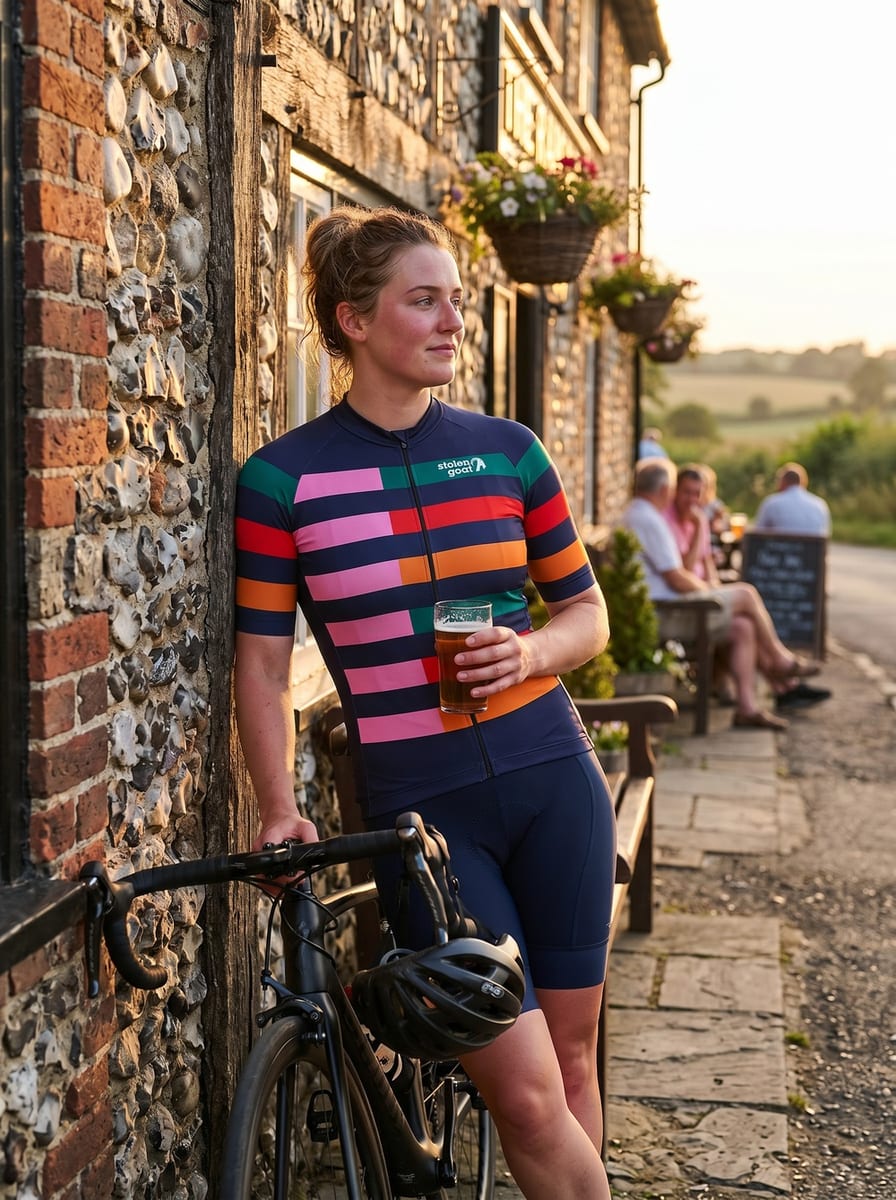

Let’s talk about the unsung hero of your cycling kit. Your jersey? Sure, it gets all the Instagram love. Your bib shorts? Obviously essential, gotta keep those hindquarters comfy. But your cycling socks? They’re not getting anywhere near enough credit.
If you’ve spent any time around cyclists, you’ll know that in cycling – your sock game is serious business. There are unwritten rules about length (we’ll get to that later), heated debates about whether it’s a cycling sin if your socks don’t match your jersey (to which we say, sock that – wear what you want). And a very real phenomenon known as “sock doping”. We don’t care what the science says, we reckon a fresh pair of statement cycling socks unlock instant performance gains.
A great pair of cycling socks aren’t just about style, though. Sure, they just happen to also look great in your cycling snaps and they’ll probably get you compliments at the mid-ride café stop. But the right pair of cycling socks can also be game changing when it comes to keeping your feet comfortable. Moisture management, temperature regulation, blister prevention… your sock choice can make all the difference when it comes to keeping your hooves happy, whether you’re smashing a sportive or grinding through the winter miles.
And yet, socks are often an after thought when cyclists are getting ready to ride. We think it’s time that changed. Justice for cycling socks – it’s time they get the kudos they deserve! In our complete guide to choosing the best cycling socks, we’ll take you through everything from materials and fit to seasonal picks and sock care tips. Keep reading – your feet will thank you for it.
Do cycling socks actually make a difference?
Short answer: absolutely. Long answer: absolutely, and here’s why.
Your feet are working hard on every ride. They’re generating heat, producing moisture, and pressing against your shoes for hours at a time. A standard cotton sock, the kind you’d wear to the office, holds onto sweat like a sponge. That means soggy feet, hot spots, and the kind of blisters that’ll make you wince when you clip back in after a coffee stop. And don’t even get us started on the eau de fromage your hooves will be pumping out by the time the ride is over!
Cycling socks are designed specifically to keep any foot-related folly at bay. They use technical fabrics that wick moisture away from your skin, keeping your feet dry and reducing friction. Most feature targeted ventilation zones (typically across the top of the foot) so air can circulate, even inside a snug cycling shoe. And because they’re designed with a closer fit, there’s less material to bunch up and cause pressure points. Plus, they’ll help to keep your feet cool in summer and warm in winter.
Over longer distances, these small differences become massive. A short ride in bad socks might just leave you with cheesy feet. But when you’re going the distance, overheating hooves can leave you in a surprising amount of discomfort.
Fun fact: many professional cyclists are famously superstitious about their socks. Some pros insist on a specific brand, a specific colour, even a specific order for putting them on. If socks didn’t make a difference, the peloton wouldn’t obsess over them!
How to choose cycling socks: key features
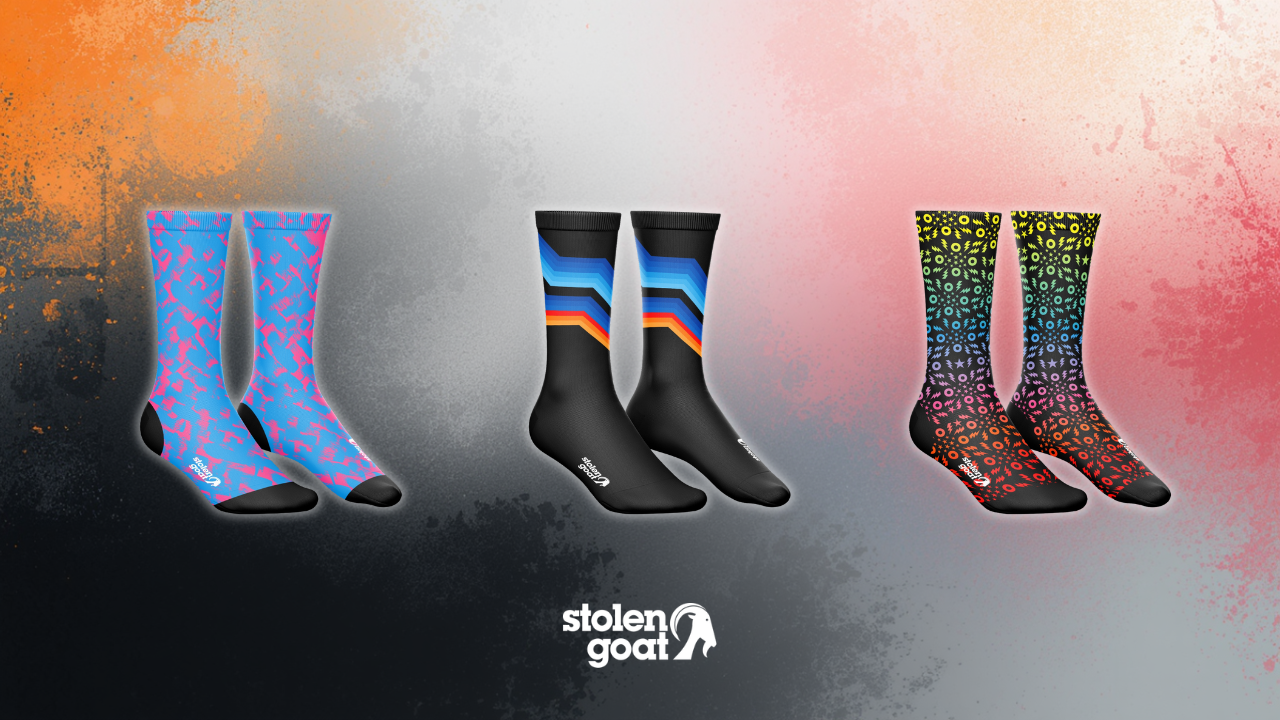
So you’re sold on the idea that proper cycling socks matter. But with dozens of options out there, how do you pick the right pair? Here’s what to look for.
Material
This is the big one. The three main choices are:
- Synthetic (polyester/nylon blends). Lightweight, fast-drying, and affordable. The go-to for most summer cycling socks. They wick moisture brilliantly and hold their shape wash after wash. Our range of printed cycling socks are just the ticket here.
- Merino wool. Don’t let the word “wool” put you off. Merino cycling socks are naturally temperature-regulating, moisture-wicking and odour-resistant. They’re superb for cooler rides and surprisingly capable in mild summer weather too. The downside? They tend to cost a bit more and dry slightly slower than synthetics.
- Blends. If you want the best of both worlds, you can also find cycling socks which combine merino with synthetic fibres, giving you the comfort and temperature regulation of wool with the durability and quick-drying properties of polyester.
Height and length
Ah, the great cycling socks length debate! We’ll cover this in detail below, but the short version: mid-calf is the classic choice, but tall cycling socks are increasingly popular. Ankle socks exist, but just be prepared to defend your choice on the club ride! Choose what works for you. A comfortable cyclist is a happy cyclist.
Fit
A good cycling sock should feel snug without being restrictive. Look for a close fit around the arch and heel. Many quality socks feature built-in arch support that reduces fatigue on longer rides. The sock should sit flat against your skin with zero bunching. If it wrinkles inside your shoe, it’s the wrong size.
Breathability and moisture wicking
Look for mesh ventilation panels, especially across the top of the foot. These zones allow airflow and help moisture escape. The best cycling socks feel almost invisible inside your shoe: dry, cool, and barely there.
Padding
Less is more for road cycling. A thinner socks help to keep you feeling connected to the pedals and maintains that direct power transfer. For touring or off road adventures, a touch more cushioning underfoot can take the edge off rougher roads.
Compression
Some cycling socks offer light compression around the calf. The jury’s out on this one. Some riders feel this gives them improved blood flow and reduced fatigue, while others notice no difference. If you’re prone to tired calves on long rides, it’s worth experimenting.
Seam construction
Flat-lock or seamless toe construction is a small detail that makes a huge difference. Raised seams across the toes are a fast track to irritation and hot spots.
Summer cycling socks vs winter cycling socks
The British weather being what it is, you’ll want at least two categories of sock in your drawer. Possibly three, if you count “that weird in-between bit in April where it’s 14°C but raining sideways.”
Summer cycling socks
Summer cycling socks are all about keeping things light and breezy. Look for thin-gauge synthetic fabrics with generous mesh panels. The sock should wick sweat rapidly and dry quickly. Nobody wants sweat-soaked socks killing the vibe on a long hot ride. Most lightweight summer socks are also lower profile in terms of padding, keeping you close to the pedal and maximising airflow.
Winter cycling socks
Winter cycling socks flip the priorities. Warmth and insulation come first, with moisture management a close second. Cold, wet feet is a fast track to feeling miserable. Merino cycling socks excel here, offering natural warmth even when damp. Thicker-gauge synthetics with thermal linings can also do the trick.
For the true winter warriors desperate to ride even when mother nature is doing her worst, waterproof cycling socks are a thing. They use a membrane layer (typically sandwiched between an inner and outer fabric) to keep water out, while still allowing some breathability. They’re bulkier than standard socks, so you’ll want to make sure your shoes have a bit of room. Pair them with neoprene overshoes on a filthy January ride and you might actually arrive home with dry feet. Might.
The golden rule for winter? Never wear cotton. Cotton holds moisture, loses all insulating properties when wet, and takes forever to dry. It’s the enemy of warm feet.
What length should cycling socks be?
This is the question that’s launched a thousand forum arguments. The traditional “rule” (if you listen to the self-appointed style police of the peloton) is that cycling socks should sit mid-calf, roughly halfway between ankle and knee. In reality? Ride your own ride. Here’s what each length offers:
- Ankle/no-show. Minimal coverage, maximum ventilation. Popular with triathletes and casual riders. Likely to raise a few eyebrows from the die hard roadies, but hey: comfort is comfort. Flash those ankles with pride!
- Mid-calf (15–20 cm). The classic cycling socks length. Offers a good balance of coverage, style, and function. This is what most riders reach for.
- Tall cycling socks. Rising in popularity. They offer extra sun protection on exposed legs, a touch of compression. Plus, much more sock real estate to show off a bold design. When you’ve got the best looking cycling socks, you want to show them off.
The practical takeaway: try different lengths, see what feels right, and don’t let anyone tell you your socks are wrong.
How to look after your cycling socks
Good cycling socks aren’t cheap, so it pays to treat them well. A few easy habits will keep them performing ride after ride:
- Wash on a cool cycle (30°C). High heat breaks down elastic fibres and moisture-wicking treatments. Turn them inside out to clean the sweatiest layer properly.
- Skip the fabric softener. Softener coats fibres and kills their ability to wick moisture. Use a mild detergent instead.
- Air dry whenever possible. Tumble dryers are convenient but harsh on technical fabrics. Hang them up or lay them flat. They’ll dry quickly anyway. that’s literally what they’re designed to do.
- Don’t bleach. Even if your white socks are looking a bit grey after a winter of mud and road spray, bleach will damage the fibres. A dedicated sports wash works wonders.
Treat them right and a quality pair should last several seasons of regular riding. Far longer than the cotton socks you’d burn through in a few months.
Stolen Goat cycling socks
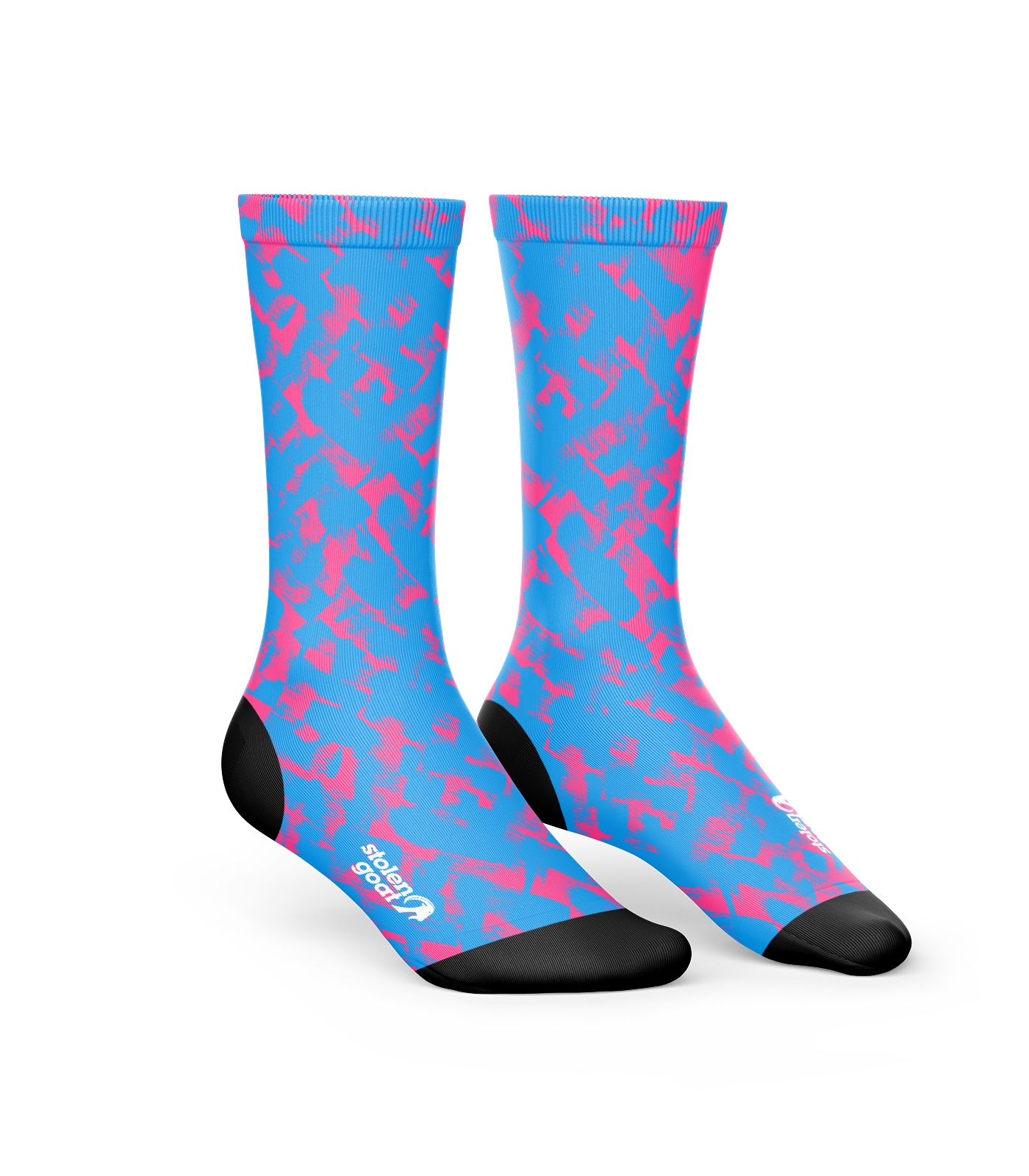
We might be biased, but we think life’s too short for boring socks. At Stolen Goat, our cycling socks are designed to be the finishing touch that pulls your whole cycling ensemble together. Whether you want to go matchy-matchy, or throw the rulebook into the ditch and deliberately clash it up. We pride ourselves on our ever-growing range of awesome cycling sock designs with something for every style.
Every pair is designed in the UK with the same attention to detail we put into our jerseys and shorts. That means bold, original artwork that stands out from the crowd, paired with technical construction that actually performs when you need it to. We’re talking quality-woven fabrics, breathable mesh panels, reinforced heels and toes, and a fit that stays put from the first pedal stroke to the last.
Our range covers everything from lightweight summer options to cosier choices for cooler months, with designs that match (or deliberately complement) our cycling jerseys and wider kit range. Sock game: upped. Next level cycling style: unlocked.
Whether you’re after something subtle for a club run or a statement pair that screams “yes, I did coordinate my socks with my cycling gloves,” there’s something in the collection for you.
Bold designs. Proper construction. Designed for riders who care about the details, and aren’t afraid to break the rules. That’s the Stolen Goat approach: from head to hooves.

Cycling socks FAQs
How many pairs of cycling socks do I need?
As a minimum, three to four pairs will keep you in clean socks across a week of riding without constant washing. If you’re riding daily or racing, five or six is more realistic. And let’s be hones, once you start collecting designs, “need” becomes a flexible concept. N+1: just as applicable to your cycling socks as it is to your growing bike collection.
Should cycling socks be thick or thin?
For road cycling, thinner is generally better as this allows a snug shoe fit for better power transfer through the pedals. Thicker socks suit touring, off-roading, or winter riding where extra insulation is welcome.
Can I wear normal socks for cycling?
You can, but you probably shouldn’t. Standard cotton socks hold moisture, bunch up, and offer no ventilation. On a short commute you’ll survive. On anything longer, you’ll notice the difference (and not in a good way).
What colour cycling socks should I get?
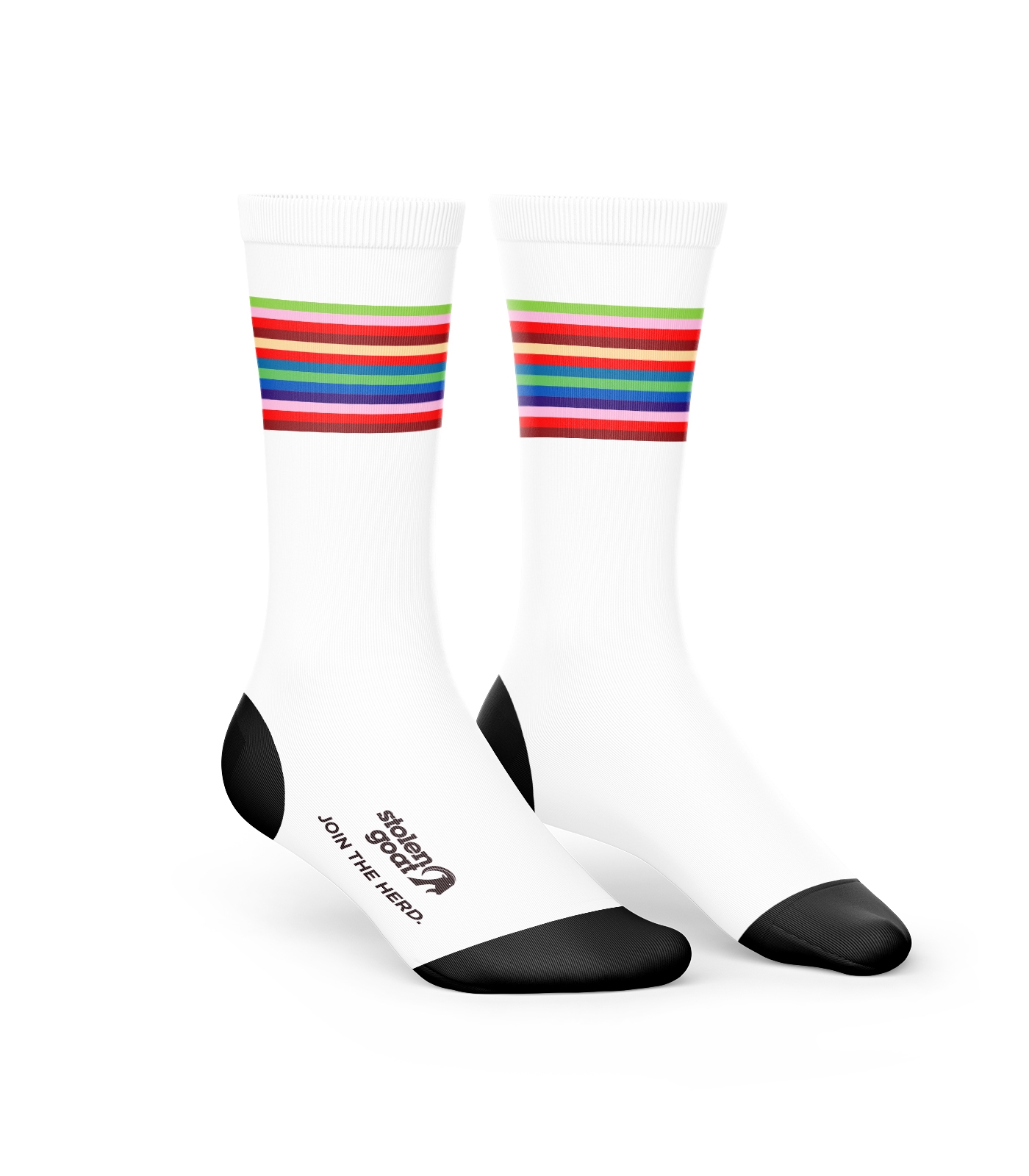
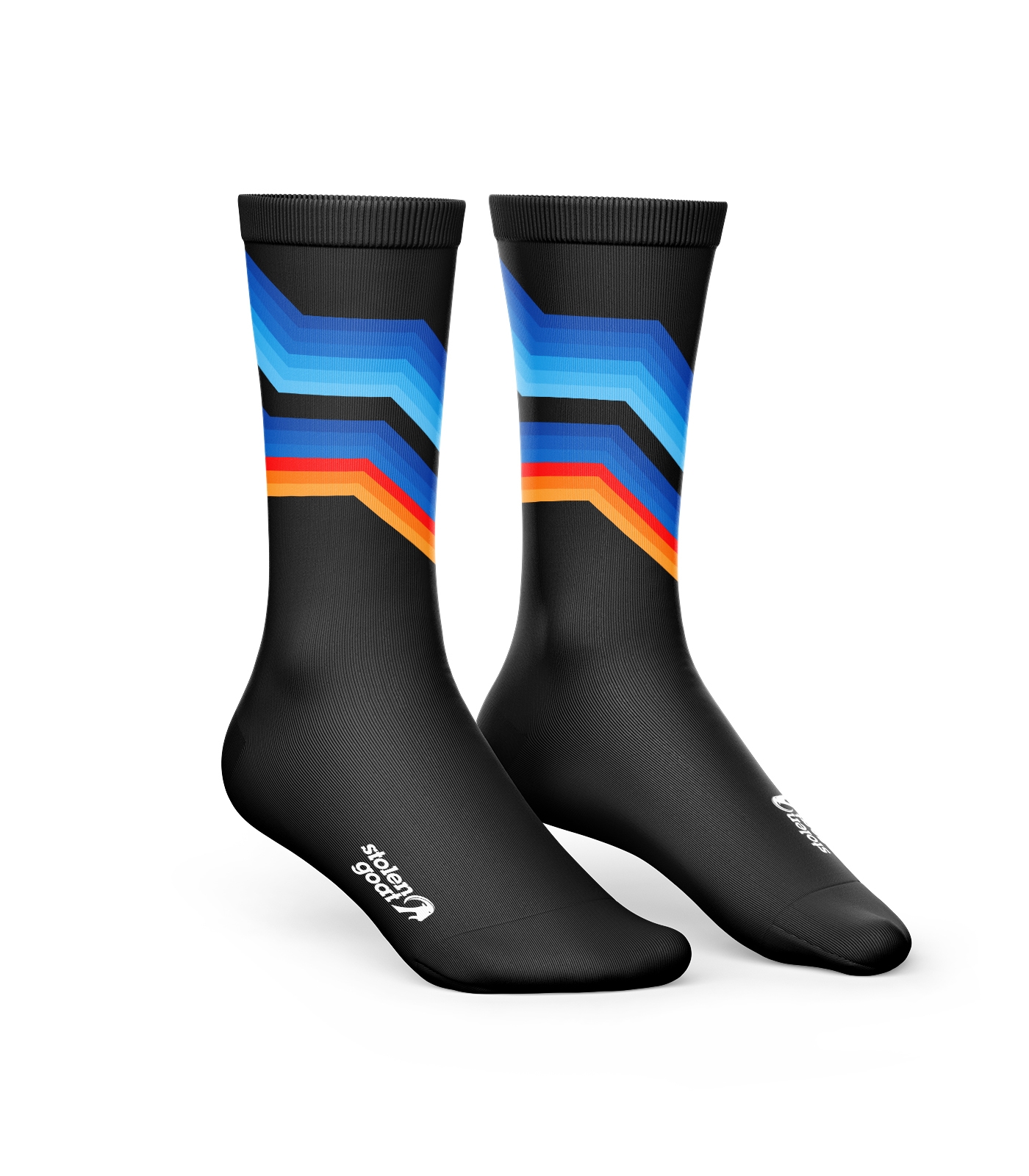
Whatever makes you happy. White is classic. Black is versatile. But if you ask us, bold colours and eye-catching patterns are where the real fun is. Match them to your jersey, clash them deliberately. Check out the Stolen Goat cycling socks range and pick a pair that’s a conversation starter at the cafe stop.
How tight should cycling socks be?
Snug but not constricting. You want them to stay in place without cutting off circulation. A good cycling sock should feel like it’s gently hugging your foot and arch: supportive, not squeezing. If you’re getting marks or indentations on your skin, go a size up.